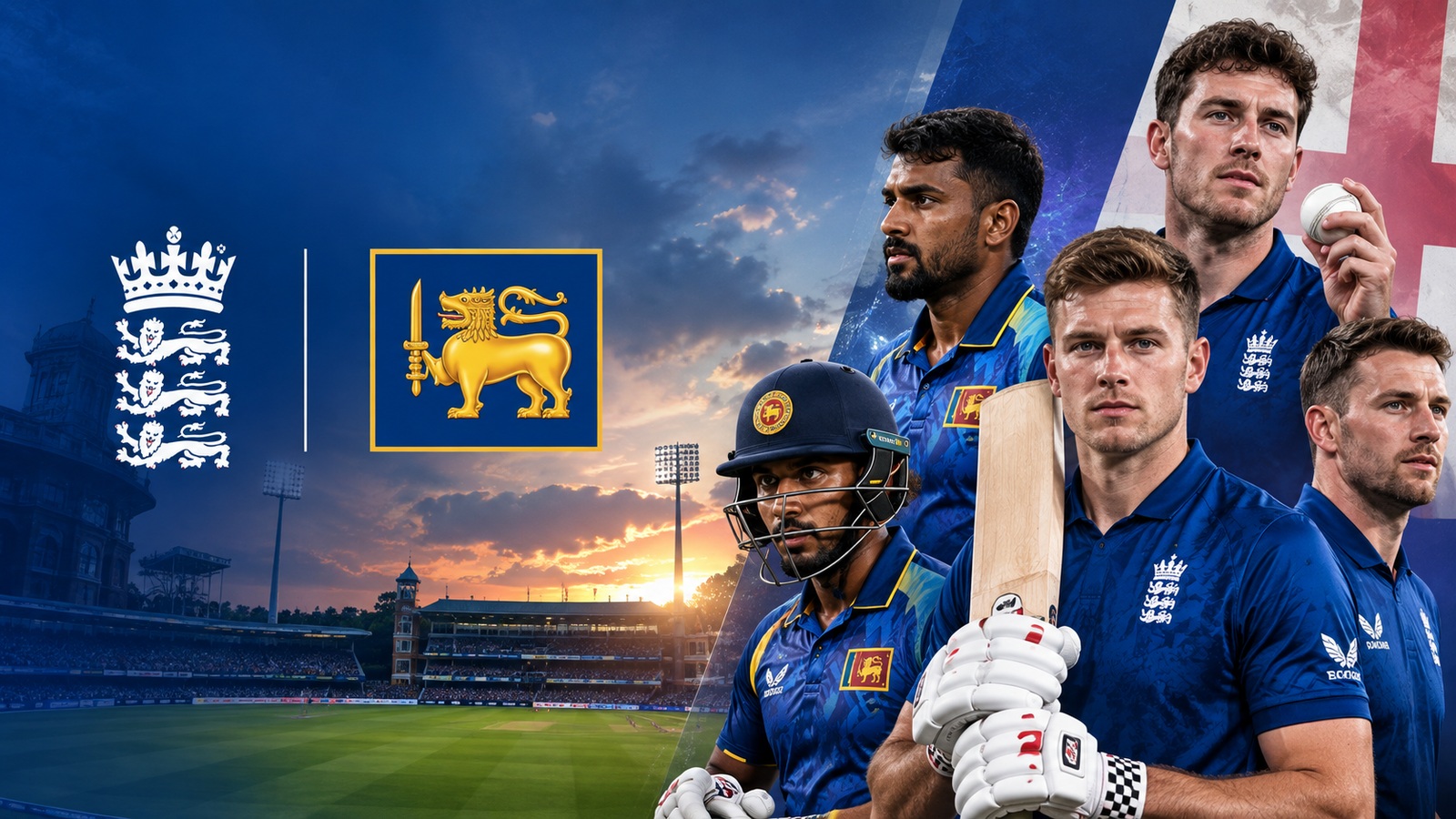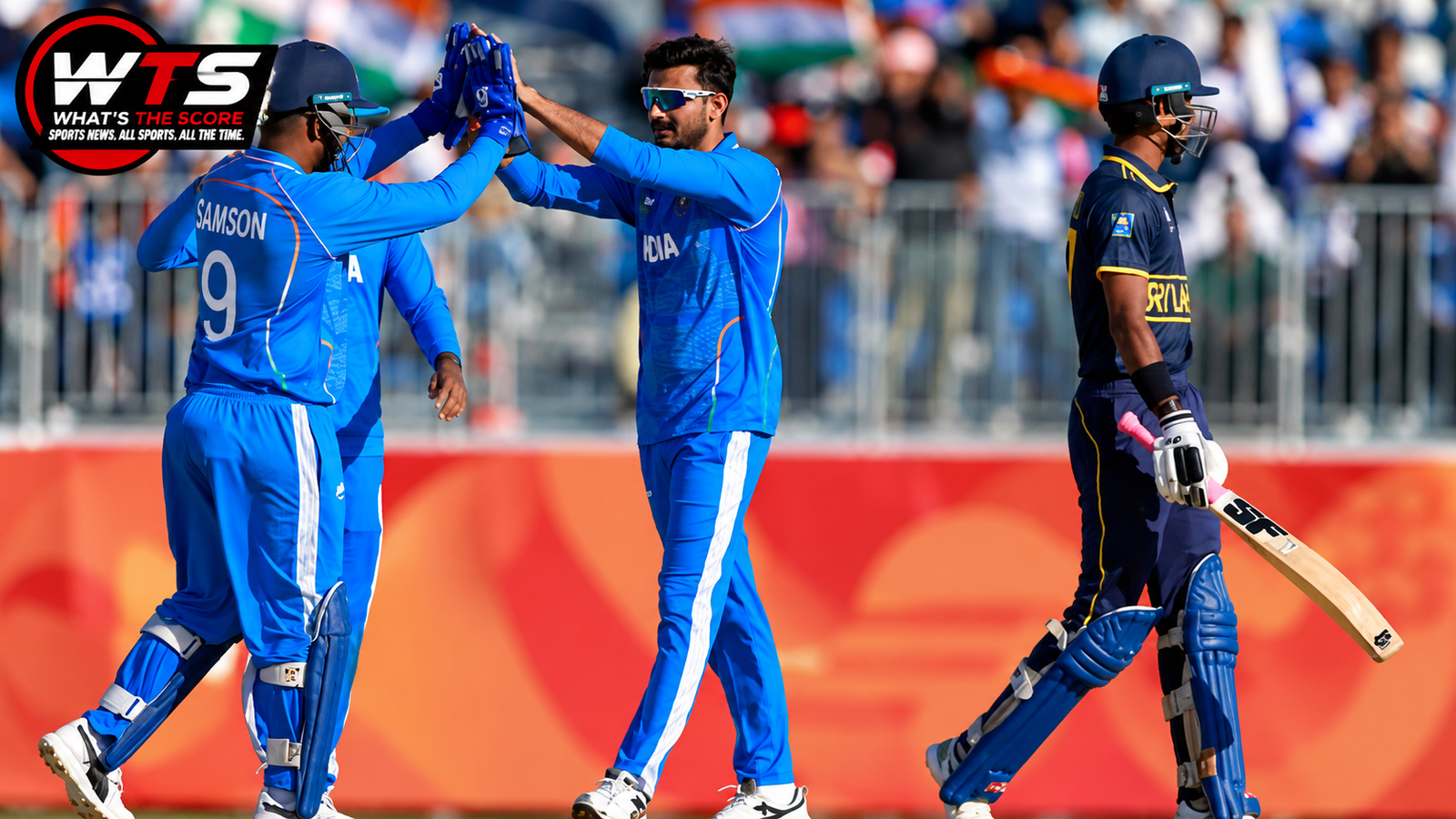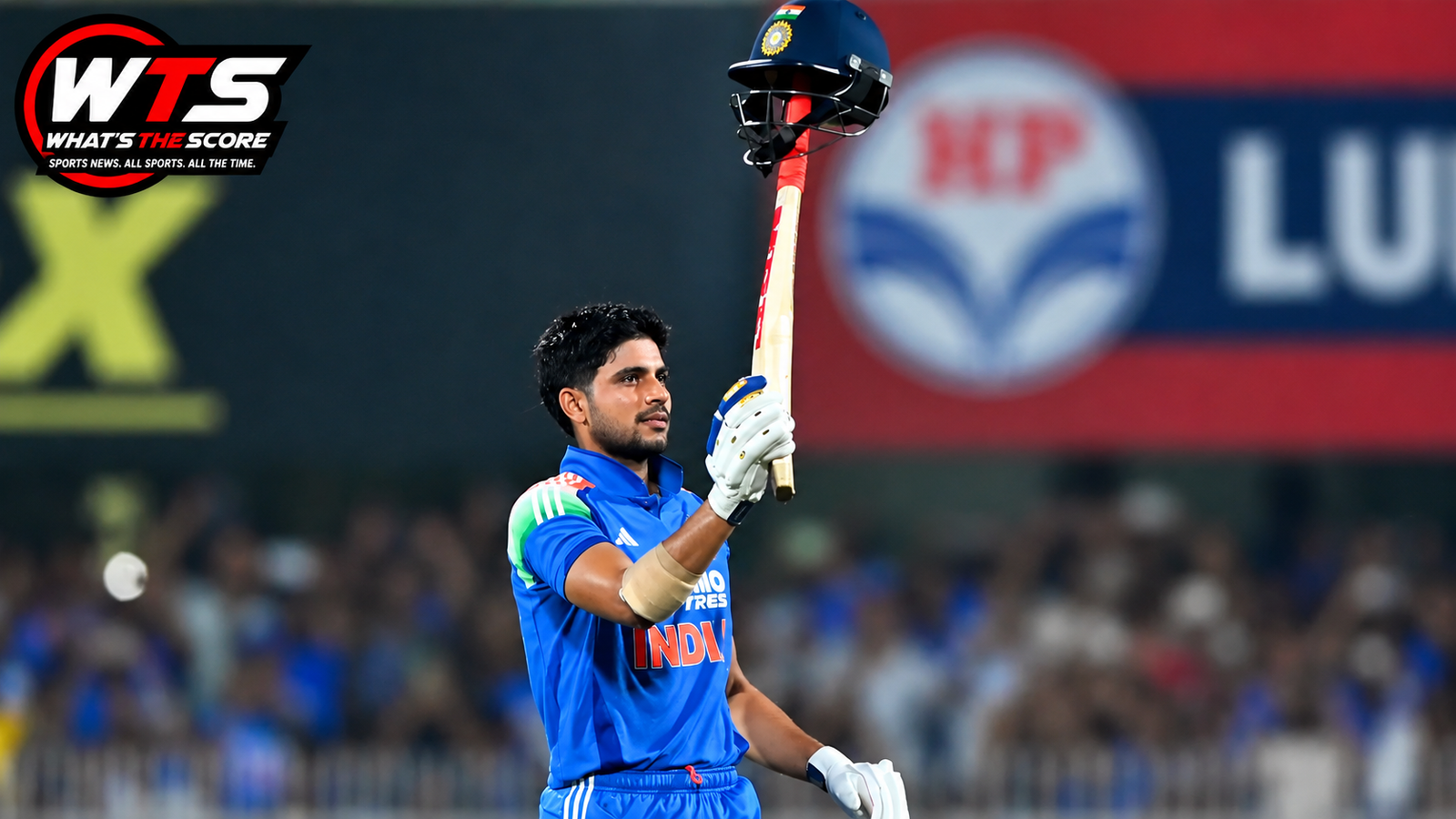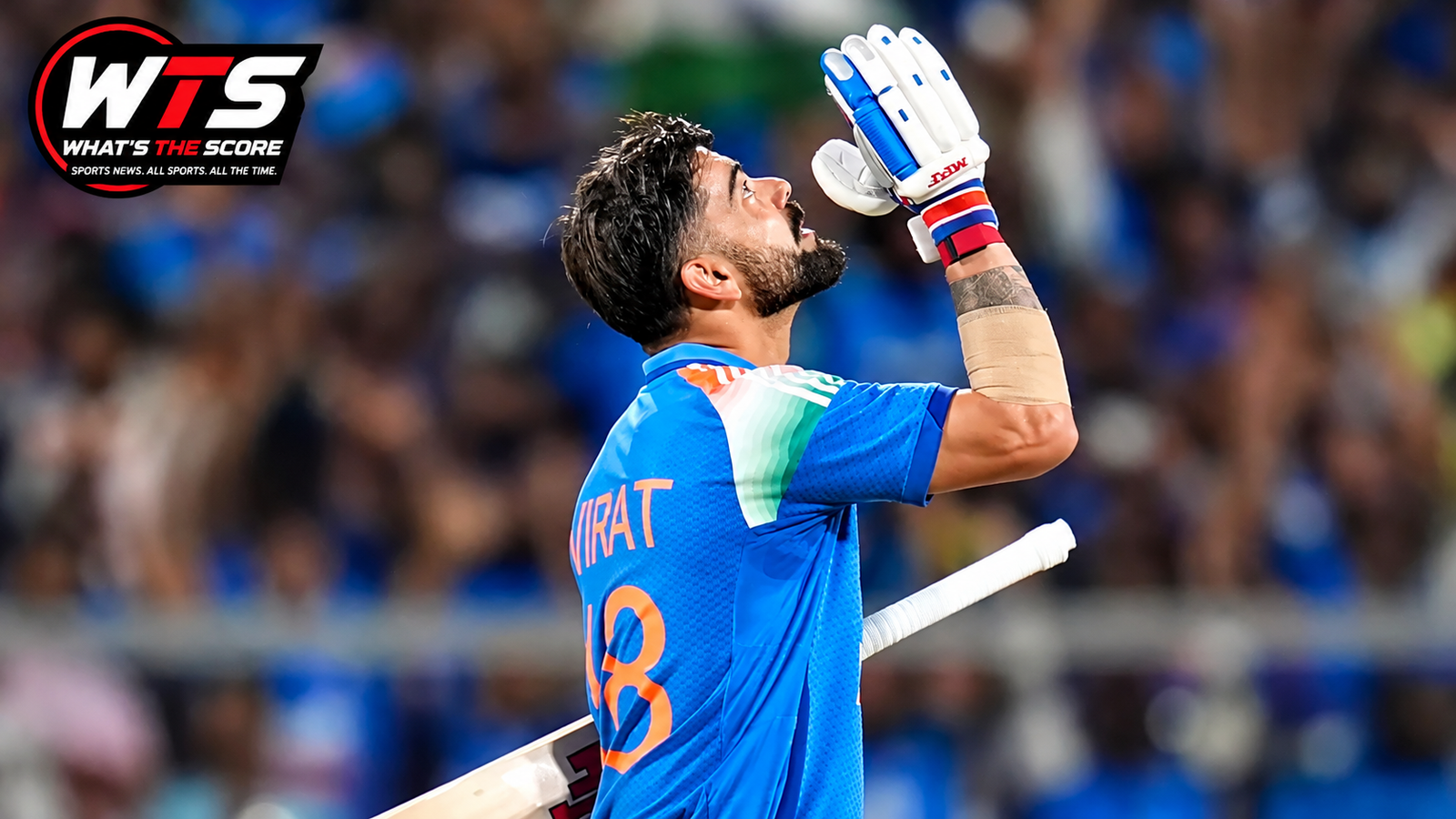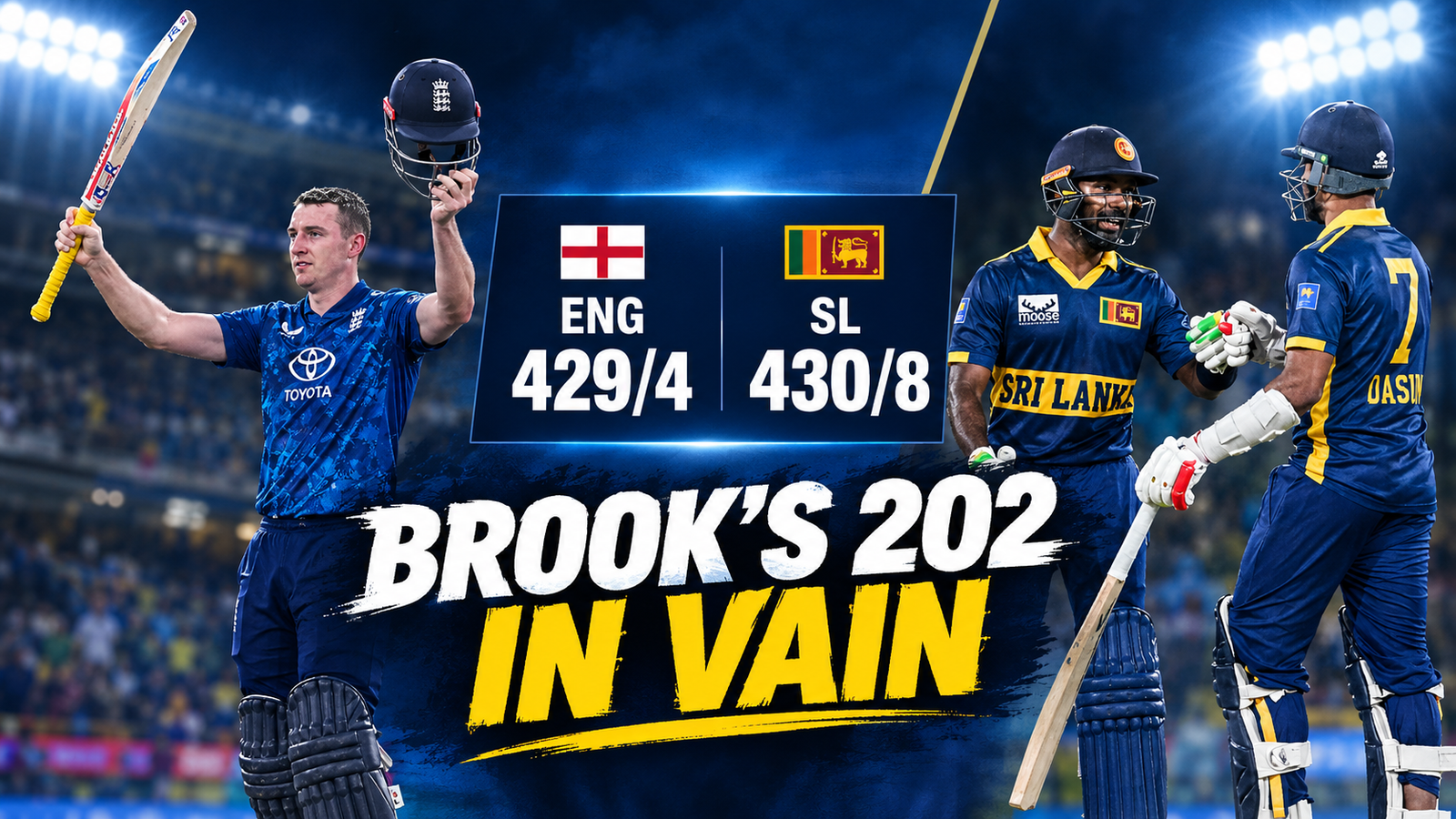
England scored 429/4. Harry Brook smashed a record-breaking double century. And yet, England still lost.
In one of the most extraordinary matches in ODI cricket history, Sri Lanka chased down 430 to defeat England by two wickets, with Janith Liyanage delivering the decisive blow in a finish that will be remembered for years.Cricket gave us everything in Rawalpindi on Thursday. A historic individual performance, a breathtaking run chase, multiple near-centuries, and a final-over finish that turned a seemingly impossible target into an unforgettable Sri Lankan triumph.
Brook had produced the innings of his ODI career. Unfortunately for England, Sri Lanka produced the chase of a lifetime.
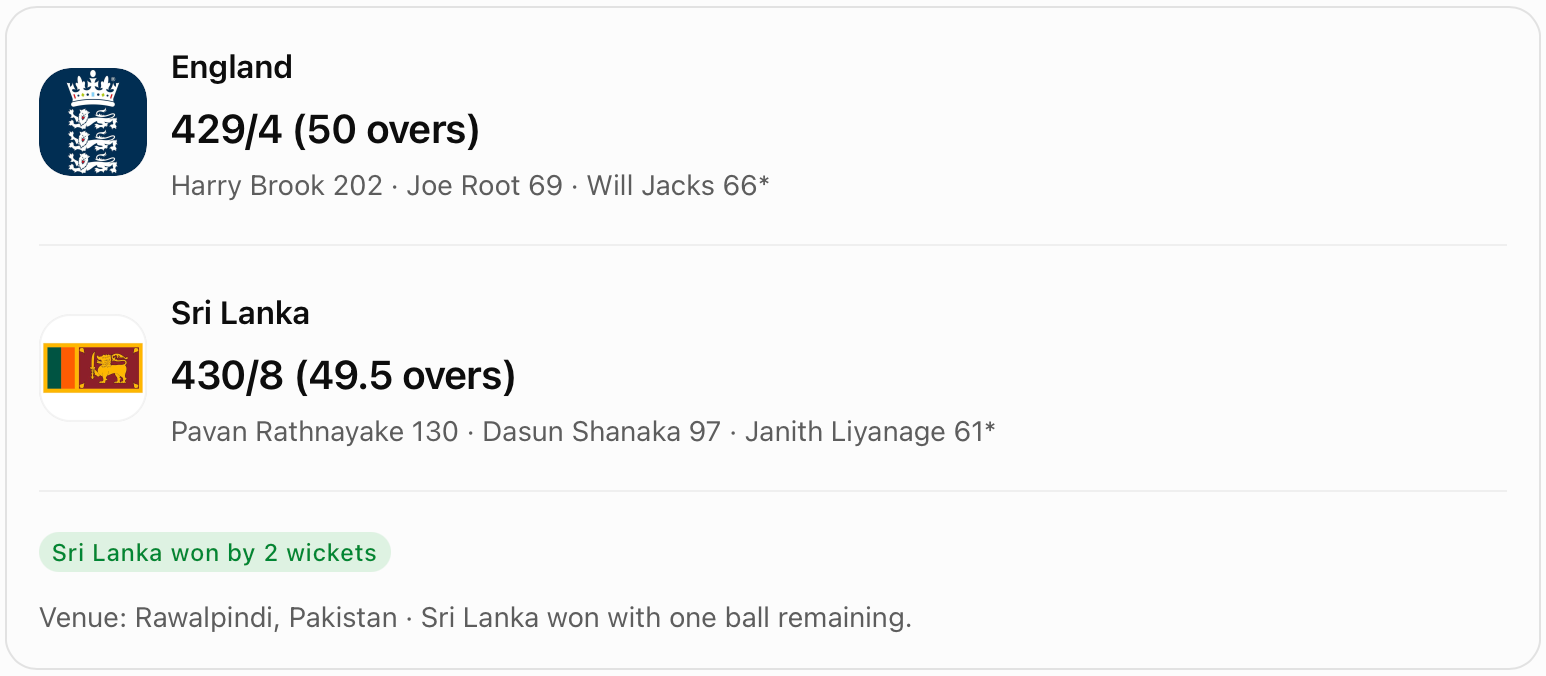
Match summary: Sri Lanka vs England, 3rd ODI
Harry Brook's 202: An innings for the record books
When Harry Brook walked off after scoring 202 from 116 balls, he had rewritten England's ODI record books. But the celebrations were destined to be short-lived.
The England captain became the first English batter to score a double century in men's ODI cricket. His knock included 21 fours and 10 sixes, and he reached the 200-run milestone in just 114 deliveries, making it the fastest ODI double century at the time of the match.
Brook also surpassed Ben Stokes' previous England ODI record of 182 against New Zealand in 2023.
What made the innings even more impressive was the way he accelerated. After a relatively measured start, Brook unleashed an extraordinary assault in the latter stages, combining powerful hitting with innovative strokeplay.
Joe Root contributed 69 before Will Jacks joined Brook to turn the final overs into a boundary-hitting exhibition. Jacks hammered 66 not out, and England plundered 156 runs in their final 10 overs.
England finished on 429/4, a formidable total that would ordinarily place a team firmly in control of an ODI.
But this was no ordinary day.
Brook's achievement deserved to headline the match. Instead, Sri Lanka's extraordinary response changed the story completely.
Sri Lanka's reply: From 24/2 to cricketing immortality
Chasing 430 is difficult enough. Losing two wickets for just 24 runs makes the task appear almost impossible.
Sri Lanka, however, refused to surrender.
The early wickets gave England an opportunity to put the game beyond reach. Instead, Avishka Fernando and Pavan Rathnayake launched a stunning recovery, stitching together a 166-run partnership for the third wicket.
Fernando looked set for a century before falling for 97 off 83 balls. Rathnayake, meanwhile, showed remarkable composure amid the pressure, reaching his century off just 87 deliveries before eventually departing for 130 off 106 balls.
But Sri Lanka were not finished.
Dasun Shanaka walked in and took the attacking approach to another level. His 97 off just 50 deliveries included eight sixes, keeping the required run rate under control even as wickets began to fall.
The message was clear: Sri Lanka were not simply trying to stay in the contest. They genuinely believed they could win it.
Janith Liyanage finishes the job in a dramatic final over
With the finish line approaching, the pressure shifted from the batters to England's bowlers.
Janith Liyanage produced an unbeaten 61 off just 27 deliveries, providing the finishing power Sri Lanka needed. When Shanaka departed three runs short of a century, the game was still hanging in the balance.
Sri Lanka needed eight runs from the final over.
Josh Tongue struck twice in successive deliveries, removing Dunith Wellalage and Eshan Malinga. Suddenly, England had another opportunity to pull off an unlikely escape.
Liyanage had other plans.
He held his nerve and smashed a six off the penultimate delivery, taking Sri Lanka to 430/8 in 49.5 overs. The chase was complete, and England's enormous total had been overhauled.
It was Sri Lanka's highest successful ODI chase and the second-highest successful run chase in men's ODI history, behind South Africa's famous pursuit of 435 against Australia in 2006.
Where did England go wrong?
England's batting was extraordinary. Their bowling and execution, however, could not match it.
1. They failed to capitalise on the early wickets
At 24/2, England had the perfect opportunity to tighten their grip on the match. With 429 runs to defend, they needed to keep taking wickets rather than simply focus on containing the scoring.
Instead, Fernando and Rathnayake rebuilt the innings with a partnership that changed the momentum.
2. The middle overs lacked breakthroughs
The partnership between Fernando and Rathnayake allowed Sri Lanka to rebuild without losing control of the required rate. England struggled to break through consistently, giving the incoming batters the platform to attack later.
The absence of regular wickets became a major problem as the chase progressed.
3. Sam Curran's expensive spell hurt England
Curran endured a difficult outing, conceding 103 runs in nine overs. His inability to consistently execute his variations at the death gave Sri Lanka opportunities to find boundaries when the pressure was at its highest.
England also struggled to find the right lengths. Brook acknowledged after the match that his side had bowled too short for too long, playing into Sri Lanka's hands.
4. Sri Lanka batted with conviction
Credit must go to Sri Lanka. This was not merely a case of England bowling poorly. The Sri Lankan batters took calculated risks, built partnerships and kept believing, even when the asking rate threatened to become overwhelming.
Rathnayake provided the foundation, Shanaka supplied the acceleration and Liyanage delivered the finishing blow.
That combination made the difference.
Brook's double century: A record without the reward
Perhaps the most striking part of the match was Brook's reaction to the defeat.
The England captain had achieved something historic, yet his team had still lost. Reflecting on the innings, he said that he wanted to make match-winning contributions and felt his double century had no value in the context of the defeat.
It was an understandable reaction from a captain who had done almost everything possible with the bat.
But this match also demonstrated an important truth about ODI cricket: individual brilliance can set up a victory, but it cannot guarantee one.
Brook's 202 will remain a landmark innings in English cricket. Yet the result will be remembered just as much for Sri Lanka's courage, adaptability and refusal to give up.
England had the record-breaking individual performance. Sri Lanka had the collective performance that mattered most.
And that is why Brook's historic double century went in vain.