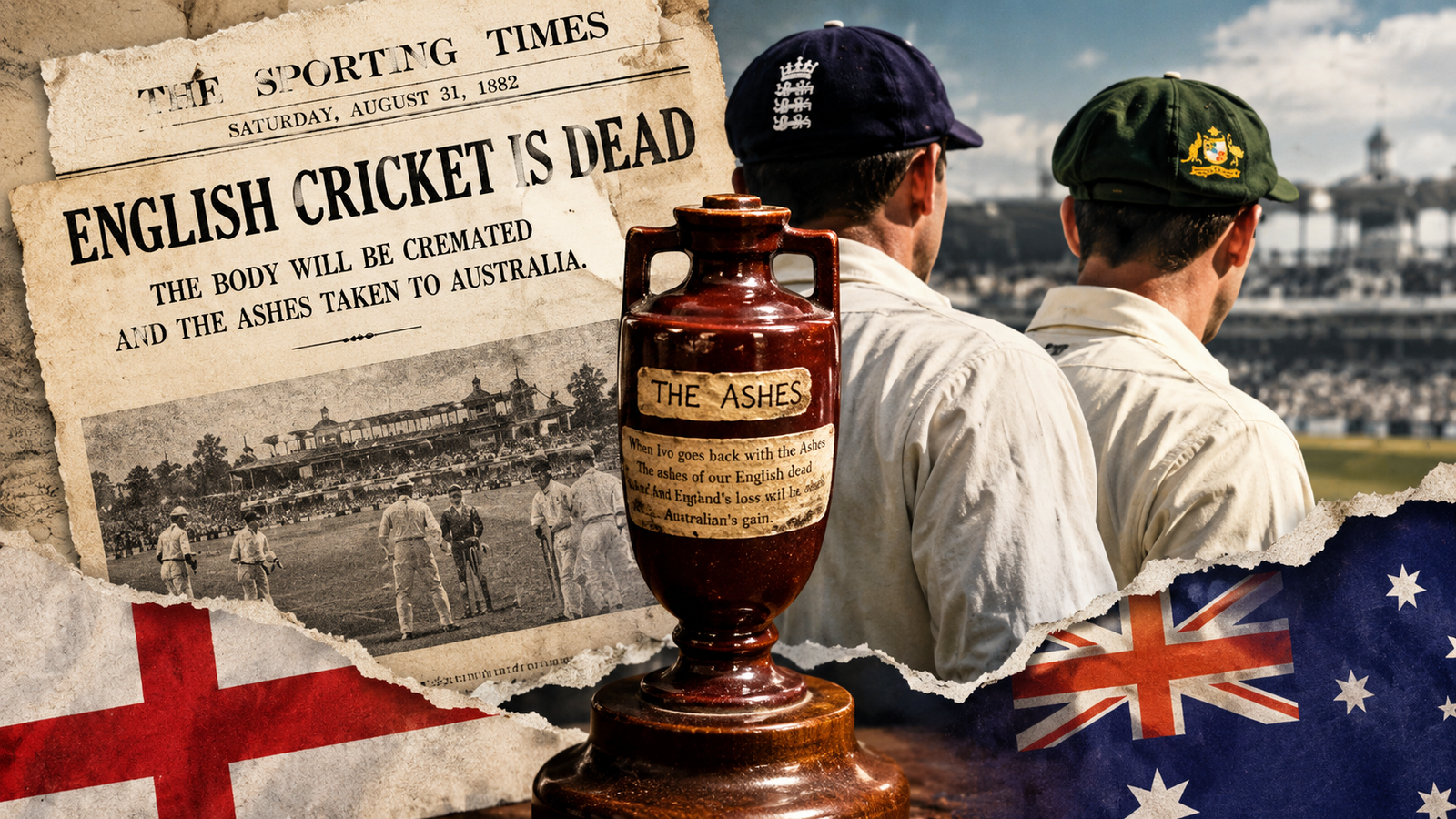
If you ever wondered why an England vs Australia Test series is called The Ashes, the answer lies in one of cricket’s greatest pieces of sporting banter.
And it all began with a humiliating defeat.
It started with a shock at The Oval
On 29 August 1882, Australia defeated England at The Oval in London by just seven runs. It was Australia’s first Test victory on English soil, and the result stunned the home cricketing public. England needed only 85 runs to win but was bowled out for 77, with Australian fast bowler Fred “The Demon” Spofforth taking the decisive wickets.
The English media wasted no time turning the defeat into dark humour.
A few days later, The Sporting Times published a mock obituary for English cricket, declaring it dead and joking that:
The body will be cremated and the ashes taken to Australia.
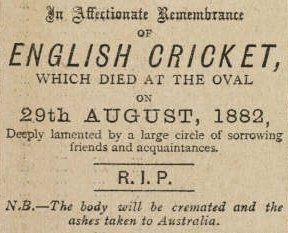
And just like that, "The Ashes" was born.
From newspaper joke to cricketing obsession
The joke became much bigger when England captain Ivo Bligh led his team to Australia for the 1882-83 tour.
Bligh promised to "regain those ashes."
England eventually won the three-Test series 2-1, and the Australians had effectively been beaten at their own game.
Then came another twist.
On Christmas Eve 1882, after a social cricket match at Rupertswood near Melbourne, Bligh was presented with a tiny terracotta urn. It became the physical symbol of the “ashes” he had supposedly travelled to Australia to recover.
But what is actually inside the Ashes urn?
That part remains a little mysterious.
The popular story says the urn contains the ashes of a cricket bail, although other versions have suggested a piece of cricket equipment or even a burnt veil. Even Lord’s acknowledges that nobody can be certain about the urn’s original contents.
The tiny urn now resides at the MCC Museum at Lord’s, rather than travelling between England and Australia.
From a joke to cricket’s greatest rivalry
What began as a newspaper insult more than 140 years ago became the name of one of sport’s fiercest rivalries.
So, why is England vs Australia called The Ashes?
Because in 1882, after Australia buried England at The Oval, an English newspaper jokingly declared English cricket dead — and its ashes bound for Australia.
A little sarcasm. A humiliating defeat. A tiny urn.
And a cricketing legend was born.