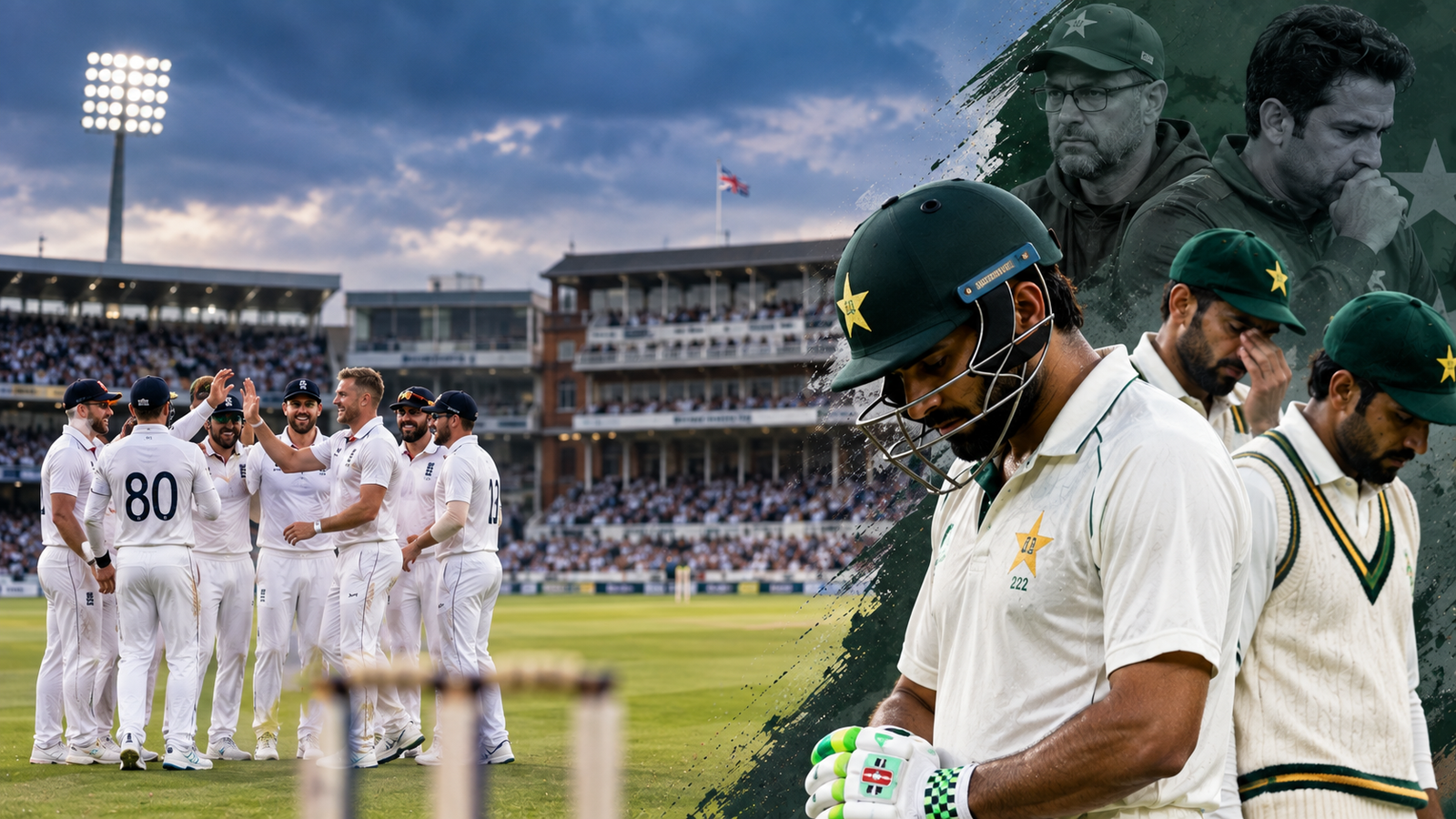
Pakistan cricket has responded to its Test series defeat in England with a dramatic mid-tour overhaul, dropping seven players, releasing head coach Sarfaraz Ahmed and assistant coach Umar Gul, and bringing seven replacements into the squad ahead of the third and final Test at Edgbaston.
The scale of the changes is remarkable, particularly because Pakistan have already lost the three-match series 2-0. England won the opening Test at Headingley by an innings and 103 runs before securing a 194-run victory at Lord’s. The third Test begins on 9 September at Edgbaston, Birmingham.
Pakistan make sweeping changes after England defeats
Pakistan's tour has gone badly from the outset. Their batting has struggled to put England under sustained pressure, while the two defeats have exposed significant problems across the team.
The Lord's defeat proved to be the tipping point.
Rather than simply making one or two selection changes, the Pakistan Cricket Board opted for a complete overhaul of the Test squad and coaching structure.
Seven players have been released:
- Mohammad Rizwan
- Imam-ul-Haq
- Salman Ali Agha
- Ali Usman
- Aamir Jamal
- Muhammad Awais Zafar
- Khurram Shahzad
Five of those players featured during the first two Tests, while Aamir Jamal and Muhammad Awais Zafar had not played in the series.
Five uncapped players called up
The PCB has also introduced significant new blood into the squad.
Seven replacements have been named, with five players receiving their first Test call-up. The two capped additions are Saim Ayub and Abdullah Fazal, who have previous Test experience.
The uncapped players are:
- Arafat Minhas
- Mohammad Imran Jnr
- Saad Baig
- Mohammad Imran, also known as Imran Randhawa
- Razaullah
The changes give Pakistan an opportunity to look beyond some of the established names and assess players who could potentially become part of the team's longer-term Test plans.
Sarfaraz Ahmed released as head coach
The changes are not restricted to the playing squad.
Head coach Sarfaraz Ahmed and assistant coach Umar Gul have also been released from their positions following the series defeat.
Pakistan white-ball coach Mike Hesson will now take charge, with former Australia fast bowler Ashley Noffke joining the coaching setup.
That means Pakistan will enter the final Test with both a significantly altered squad and a revamped coaching team.
Why has Pakistan reacted so dramatically?
The results explain part of the frustration.
Pakistan were beaten by an innings and 103 runs in the first Test at Headingley. England then won the second Test at Lord's by 194 runs, taking an unassailable 2-0 lead in the series.
The defeats were not merely narrow losses. Pakistan struggled to produce competitive batting performances and were unable to maintain pressure on England over long periods.
The Lord's defeat was particularly damaging because Pakistan had opportunities early in the match but ultimately failed to prevent England from taking control.
The PCB's response suggests that the problems are being viewed as broader than one poor performance.
Mohammad Rizwan among the biggest names dropped
Perhaps the most surprising name on the list is Mohammad Rizwan.
The experienced wicketkeeper-batter has been an important part of Pakistan's Test setup, making his release one of the most significant decisions from the reshuffle.
Imam-ul-Haq is another major omission, while Salman Ali Agha has also been sent home.
Salman had captained Pakistan in the first Test in the absence of injured regular captain Babar Azam before being left out for the second match.
The decision therefore represents a substantial reset of Pakistan's batting and leadership group.
Can the new-look Pakistan team respond?
The third Test is now effectively a chance for Pakistan to salvage something from a disastrous tour.
With the series already lost, the Edgbaston Test will not change the overall result. But it could provide valuable information about Pakistan's next generation.
The five uncapped players will be under particular scrutiny.
A strong performance from even two or three of them could give Pakistan's selectors options beyond the current group and potentially reshape the team's Test plans.
At the same time, the wholesale changes create another problem: continuity.
Players need time to establish themselves in Test cricket, and Pakistan are now asking several newcomers to step into an international series against an England side that has already demonstrated its superiority.
Pakistan's bigger problem is consistency
The latest changes also raise a bigger question about Pakistan cricket: is another major overhaul the solution?
Pakistan have frequently responded to disappointing results with changes to captains, coaches, selectors and playing personnel.
While accountability is essential, constant restructuring can make it difficult for a Test side to develop stability and a clearly defined identity.
The Edgbaston Test will therefore be about more than winning or losing.
It will provide an early indication of whether this latest overhaul represents a genuine rebuilding exercise or simply another reaction to a disappointing result.
England vs Pakistan: What happens next?
England will enter the final Test with a 2-0 series lead and the opportunity to complete a 3-0 clean sweep. Pakistan, meanwhile, will attempt to finish the tour with a victory after making some of the most dramatic changes seen during a Test series in recent years.
The third Test begins at Edgbaston on 9 September 2026.
For Pakistan, the immediate objective is obvious: stop the losing streak. The longer-term objective is considerably harder — build a stable Test team capable of competing consistently away from home.