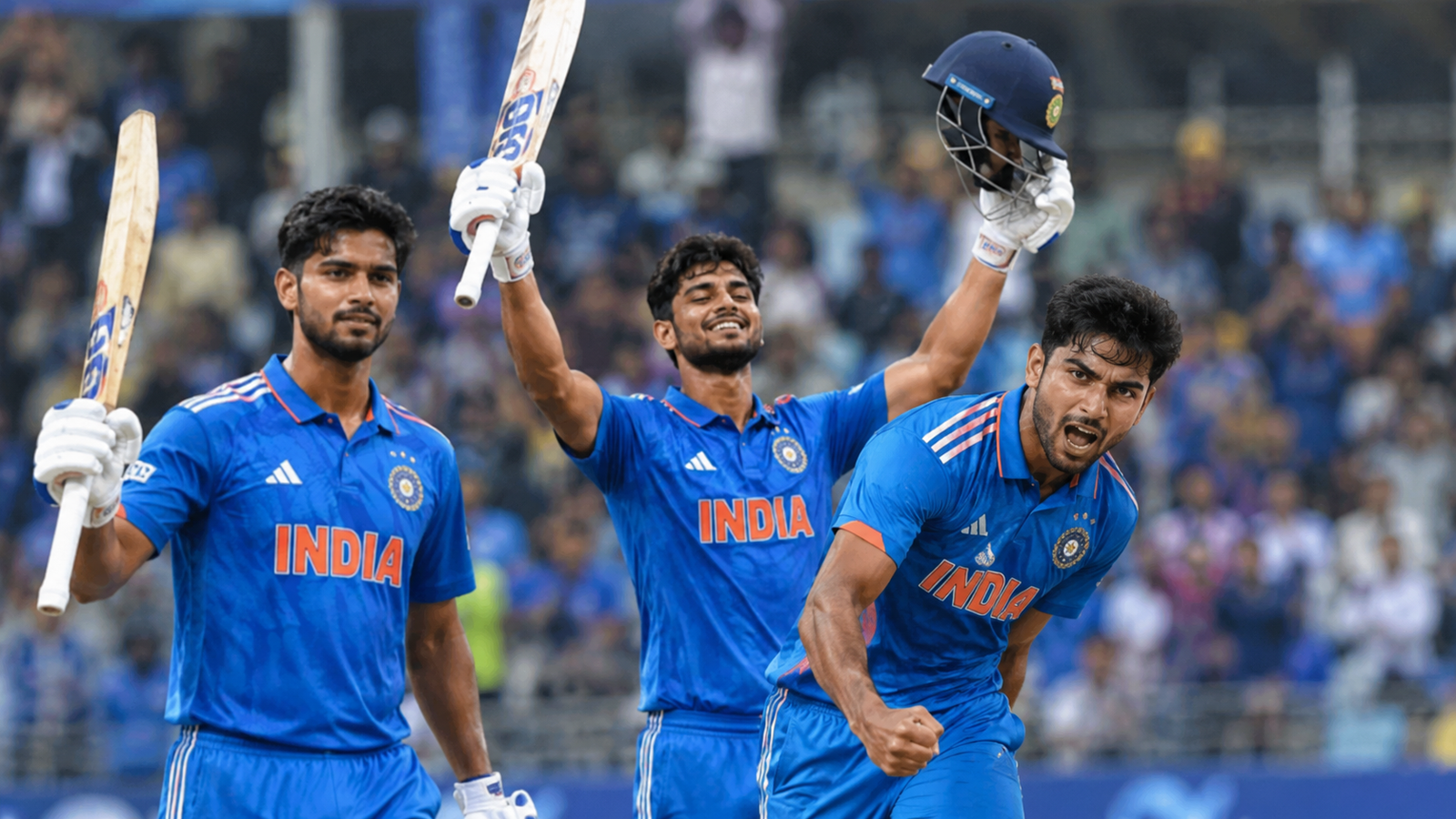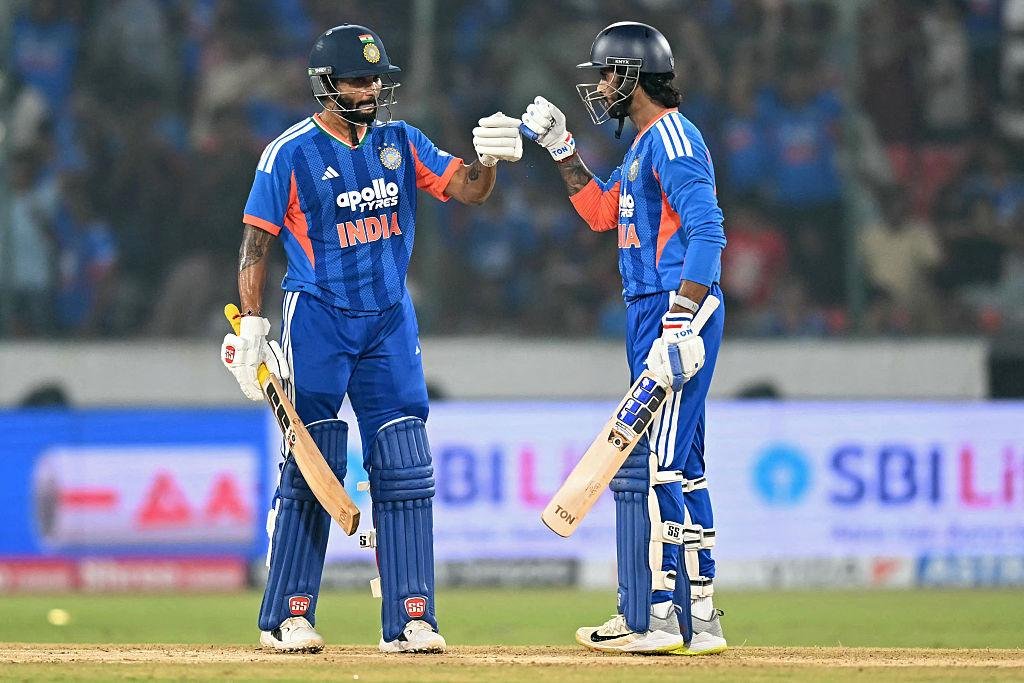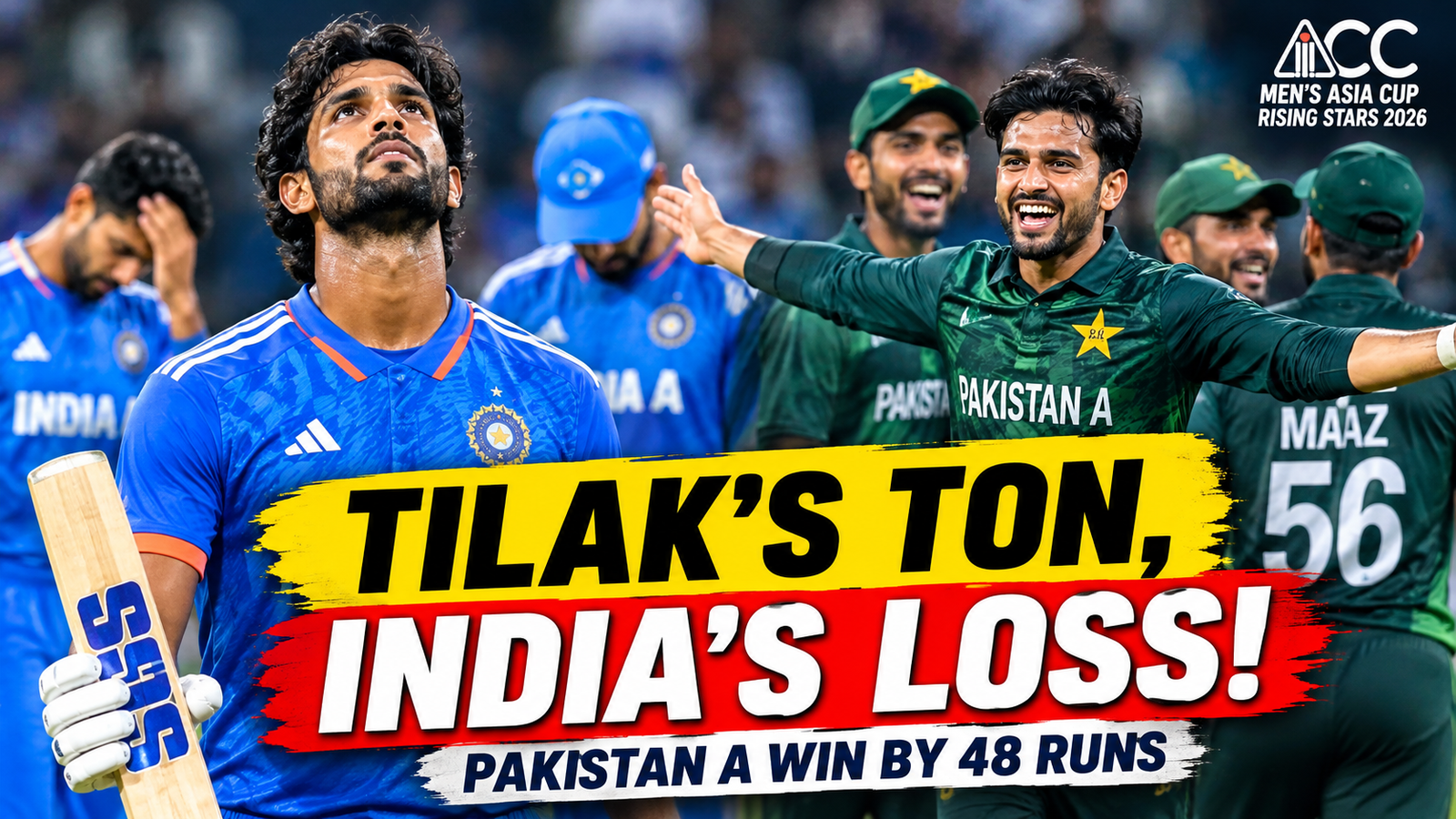
India A suffered a 48-run defeat against Pakistan A in the ACC Men's Asia Cup Rising Stars 2026, despite a magnificent unbeaten century from captain Tilak Varma.
Chasing 314 in Doha, India A were bowled out for 265 in 49.1 overs. Tilak scored an unbeaten 100 off 149 balls, but his effort was not enough to take India across the finish line.
Pakistan A, meanwhile, produced a more complete performance. Hasan Nawaz starred with both bat and ball, scoring 79 runs and picking up three wickets to earn the Player of the Match award.
The result raises some important questions about India's batting approach, middle-order contributions, bowling discipline and ability to handle pressure in a high-profile contest.
1. Pakistan A's batting: A flying start and crucial middle-order partnerships
Pakistan A won the toss and elected to bat. Their openers Shamyl Hussain and Maaz Sadaqat immediately put pressure on India's bowling attack.
- Shamyl Hussain – 33 off 23 balls
- Maaz Sadaqat – 59 off 63 balls
The opening partnership of 66 runs gave Pakistan the platform they wanted. India's bowlers did manage to pull things back, but Hasan Nawaz ensured that the momentum did not completely shift.
Nawaz scored 79 off 82 deliveries, including five fours and four sixes. His innings was particularly important because he held the middle order together while wickets fell around him.
Captain Abdul Samad contributed 28, while Farhan Yousaf provided the finishing push with 56 off just 48 balls. Mohammad Imran Randhawa added a quick 23 off 14 deliveries.
Pakistan eventually reached 313 in 49.2 overs.
India's bowling had moments of recovery, but lacked control during crucial passages. Harshit Rana conceded 77 runs in his nine overs, while Pakistan's batters repeatedly found ways to score boundaries and maintain pressure.
2. India's chase: Abhishek Sharma gave hope, but the middle order collapsed
A target of 314 was challenging, but certainly achievable on a batting-friendly surface.
India A needed a strong start. Instead, they found themselves at 27/2 inside five overs.
Vaibhav Sooryavanshi departed for 11, while Ayush Badoni was dismissed for a duck. Ali Raza was particularly impressive, getting the ball to move and troubling India's top order.
Then came Abhishek Sharma.
The left-hander counter-attacked in typical fashion, smashing 70 off just 42 balls, with six fours and six sixes. His innings briefly changed the complexion of the chase.
But there was a problem: Abhishek's aggression was not matched by the other batters.
Tilak Varma was struggling to rotate the strike at the other end. India's scoring rate slowed, and the pressure gradually shifted back to the batting side.
When Abhishek fell at 93/3, the innings began to unravel.
Kumar Kushagra was dismissed for 5, and Rinku Singh departed for 9. Suryansh Shedge also failed to provide the necessary support.
India were suddenly struggling at 129/6 in the 26th over.
3. Tilak Varma's century: A brilliant individual effort without enough support
Tilak Varma's innings deserves special mention.
The India A captain finished unbeaten on 100 off 149 balls, registering his second consecutive century in the tournament.
However, this was a different kind of innings from his usual aggressive batting.
With wickets falling at regular intervals, Tilak had to rebuild the innings and protect the lower order. His partnership with Shahbaz Ahmed became India's last realistic opportunity to get back into the contest.
Shahbaz scored 56 off 49 balls, and the pair added 112 runs for the seventh wicket.
For a brief period, India had hope.
But the partnership came too late. The asking rate had climbed, and Pakistan's bowlers were disciplined enough to avoid giving away easy boundaries.
Shahbaz eventually departed, and the lower order could not sustain the fight.
Tilak reached his hundred but was dismissed by Ahmed Daniyal on the very next ball. India were all out for 265 in 49.1 overs.
4. Five reasons why India A lost to Pakistan A
This was not simply a case of one batter failing or one bowler having an expensive day. India's defeat was the result of several issues coming together.
Reason 1: Pakistan won the powerplay battle
The difference between the two teams was visible from the opening overs.
Pakistan A were 65/0 after 6.3 overs, while India A were 32/2 at the same stage of their innings.
That is a significant difference in a 50-over contest. Pakistan had the freedom to build their innings, while India were immediately forced into recovery mode.
Reason 2: India's bowling failed to contain the top order
India did manage to take wickets at regular intervals, but Pakistan's batters continued scoring at a healthy rate.
Harshit Rana conceded 77 runs in nine overs. Although he picked up two wickets, Pakistan's aggressive start and middle-order contributions meant India could not restrict the opposition to a manageable total.
The bigger issue was the inability to control the scoring rate when Pakistan's established batters were at the crease.
Reason 3: The middle-order collapse
This was arguably India's biggest batting problem.
After Abhishek Sharma's dismissal, India lost wickets without building meaningful partnerships.
Kushagra, Rinku and the middle order could not provide the support Tilak needed.
A chase of 314 requires partnerships, not just individual contributions. India had one explosive innings and one fighting century, but too many batters failed to make substantial contributions.
Reason 4: Tilak and Shahbaz's partnership came too late
The 112-run seventh-wicket partnership between Tilak and Shahbaz was impressive, but it also highlighted India's earlier failure.
India were already six wickets down when the partnership developed.
The duo had to rebuild rather than attack freely. By the time they started making serious progress, the required run rate had become difficult to manage.
Reason 5: Pakistan's bowlers handled pressure better
Ali Raza and Hasan Nawaz picked up three wickets apiece.
Nawaz's contribution was particularly impressive. After scoring 79 with the bat, he returned to take 3/45.
Pakistan's bowlers understood the situation. They kept the pressure on India's middle order, restricted boundaries and forced batters into risky shots.
That ability to execute plans under pressure ultimately separated the two sides.
5. The biggest takeaway: Individual brilliance cannot replace partnerships
There are three performances worth remembering from this match.
Abhishek Sharma – 70 off 42
Provided the attacking start India needed, but his dismissal exposed the lack of stability around him.
Tilak Varma – 100 off 149
Showed tremendous responsibility as captain, but his century could not compensate for the earlier collapse.
Hasan Nawaz – 79 and 3/45
Delivered an all-round performance, influencing both innings and earning Player of the Match.
6. What should India A learn from this defeat?
India A have plenty of talent in this squad. Players such as Abhishek Sharma, Vaibhav Sooryavanshi, Rinku Singh and Tilak Varma have the ability to dominate opposition attacks.
But talent alone does not win 50-over matches.
The team needs to improve in three areas:
- Powerplay discipline: Avoid losing early wickets while chasing big totals.
- Middle-order responsibility: Build partnerships instead of depending on one or two players.
- Bowling consistency: Prevent opposition teams from reaching 300-plus totals through expensive spells and boundary leakage.
There is also a leadership lesson for Tilak Varma. His innings showed responsibility, but India's batting structure needs to ensure that the captain does not have to rebuild the innings almost single-handedly.
Conclusion: Pakistan A were the more complete team on the day
India A will be disappointed with this result, particularly after Tilak Varma's century and Abhishek Sharma's explosive start.
But Pakistan A deserved the victory.
They batted with greater consistency, handled the middle overs better and executed their bowling plans when the game was on the line.
For India, the defeat is a reminder that a strong batting lineup is not enough. In 50-over cricket, partnerships, momentum and game awareness matter just as much as individual talent.
The real question is whether India A can learn from this defeat and respond strongly in their remaining group matches.
Because in tournaments like the ACC Men's Asia Cup Rising Stars, one bad performance can change the entire campaign.