New Zealand had India on the ropes. Mitchell Santner had ripped through the middle order, the required run rate was climbing, and the chase of 181 was threatening to slip away. But just when the hosts looked set to level the series, Tilak Varma and Nitish Kumar Reddy produced a stunning rescue act to take India home by four wickets in Christchurch.
This was not a comfortable victory. It was a test of temperament, finishing ability and India's depth in T20 cricket. With an unbeaten 69-run partnership for the seventh wicket, Tilak and Nitish transformed a difficult chase into a memorable Indian win, giving the visitors a 2-0 lead in the five-match T20I series.
So, what helped India beat New Zealand in this close encounter? Let's break down the five decisive factors behind India's comeback.
NZ vs IND 2nd T20I: Match summary
1. Early wickets gave India the perfect start with the ball
India's bowlers understood the importance of putting New Zealand under pressure early. Arshdeep Singh and Bhuvneshwar Kumar removed Tim Seifert and Daryl Mitchell, while Prince Yadav dismissed Finn Allen to leave the hosts struggling at 41/3 at the end of the Powerplay.
At that stage, India had an opportunity to restrict New Zealand to a modest total. However, Glenn Phillips and Bevon Jacobs had other plans.
The lesson here is simple: early wickets create pressure, but teams must keep attacking even when a new partnership begins to settle.
2. Glenn Phillips and Bevon Jacobs changed the momentum
Glenn Phillips: 70 off 43 balls
Phillips once again proved how dangerous he can be when he finds his rhythm. Alongside Bevon Jacobs, he rebuilt the New Zealand innings with a crucial 116-run fourth-wicket partnership.
Bevon Jacobs: 58 off 46 balls
Jacobs provided the stability that allowed Phillips to attack. Their partnership rescued New Zealand from a difficult position and helped the hosts finish on 180/5.
India deserve credit for striking early, but the middle overs showed that New Zealand were not going to surrender easily. The 181-run target was challenging enough to make the visitors work for every run.
3. Mitchell Santner exposed India's weakness against spin
If there was a phase when New Zealand looked firmly in control, it was the middle overs of India's chase.
Mitchell Santner delivered an outstanding spell of 4/21, dismissing Abhishek Sharma, Shreyas Iyer, Axar Patel and Naman Dhir. India slipped to 70/5 before Naman's counterattacking 31 off 17 balls offered some hope. When Santner removed Dhir too, India were left reeling at 112/6 in the 15th over.
This was the key tactical battle of the match. Santner varied his pace, controlled his lines and forced India's batters to take risks.
India's top and middle order struggled to build momentum against spin. With 68 runs still required from the final five overs, the match seemed to be slipping away.
But this is where India's lower-order batting depth became decisive.
4. Tilak Varma showed the value of composure under pressure
Tilak Varma was the difference between a narrow defeat and a memorable victory.
Walking in at No. 6, he did not immediately try to hit his way out of trouble. He assessed the situation, stayed at the crease and waited for opportunities to attack. Once the chase entered its final phase, he shifted gears dramatically.
His unbeaten 51 off 25 balls included the boundaries India desperately needed to bring the asking rate under control. He attacked New Zealand's pace bowlers at the death and turned a difficult equation into a chase India could finish.
What stood out was not just the hitting. It was his decision-making.
Tilak did not panic when Santner dismantled the middle order. He recognised that the chase could still be won if he stayed until the end.
That is the difference between scoring quick runs and playing a match-winning T20 innings.
5. Nitish Kumar Reddy provided the perfect finishing partner
Tilak needed a partner who could take pressure off him, rotate the strike and find boundaries when required. Nitish Kumar Reddy delivered exactly that.
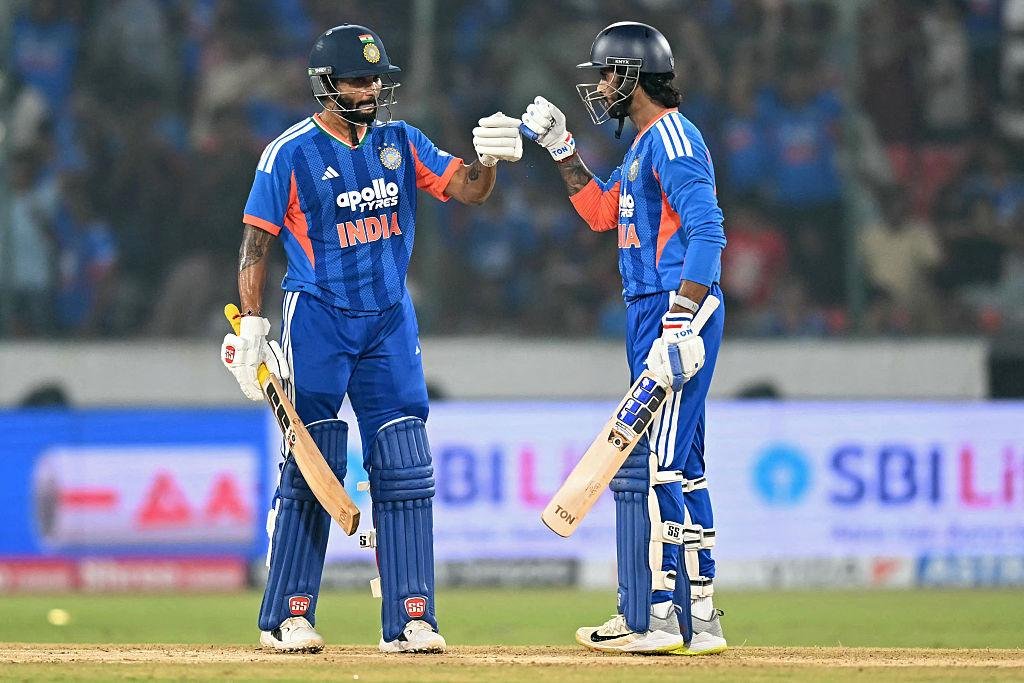
Reddy smashed 26 off just 13 balls, ensuring India did not depend on Tilak alone. Their unbeaten 69-run partnership from only 30 balls became India's highest seventh-wicket partnership in men's T20 internationals, surpassing the previous 63-run mark against New Zealand set by Dinesh Karthik and Krunal Pandya in 2019.
The pair complemented each other brilliantly. Tilak combined calculated aggression with composure, while Reddy brought urgency and power.
India needed 11 runs from the final over. Tilak struck a boundary to ease the pressure, and Reddy hit the winning runs with a shot down mid-on. India crossed the line with one ball remaining.
The biggest takeaway? India's lower order is not simply there to support the top order. It can win matches on its own.
What does the win mean for India?
India have taken a 2-0 lead in the five-match T20I series, following another four-wicket win in the opening match. The third T20I is scheduled for 27 October in Wellington.
The result gives India a significant advantage, but it also offers areas to work on. The middle order will need to find better ways to counter high-quality spin, especially when the pitch slows down. New Zealand, meanwhile, will be disappointed after creating a strong winning position but failing to contain India's finishers.
For India, the biggest positive is the confidence gained from winning a match that appeared to be slipping away. Close contests often reveal more about a team's character than one-sided victories.
And in Christchurch, Tilak Varma and Nitish Kumar Reddy showed that India have the temperament and firepower to win under pressure.