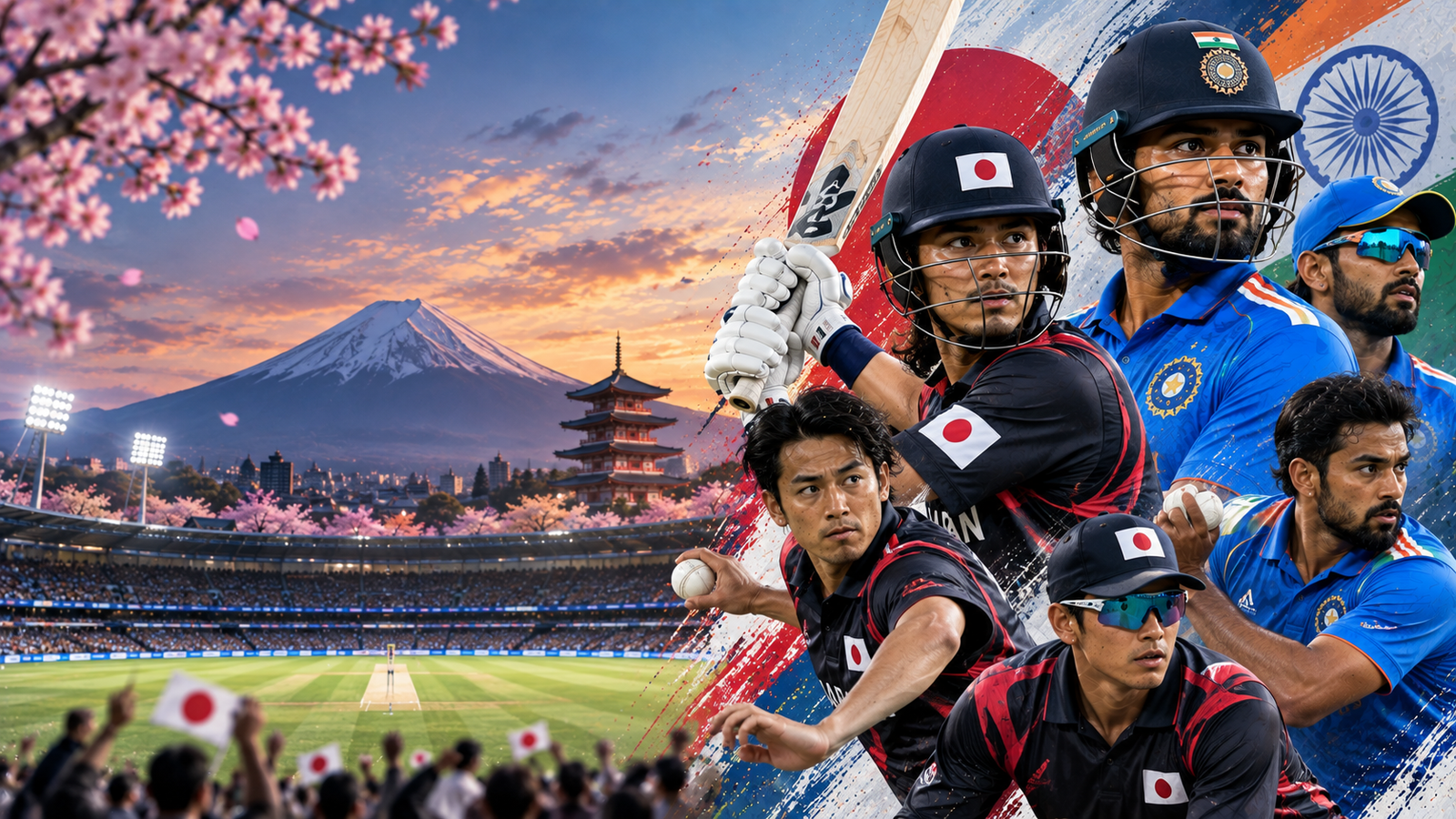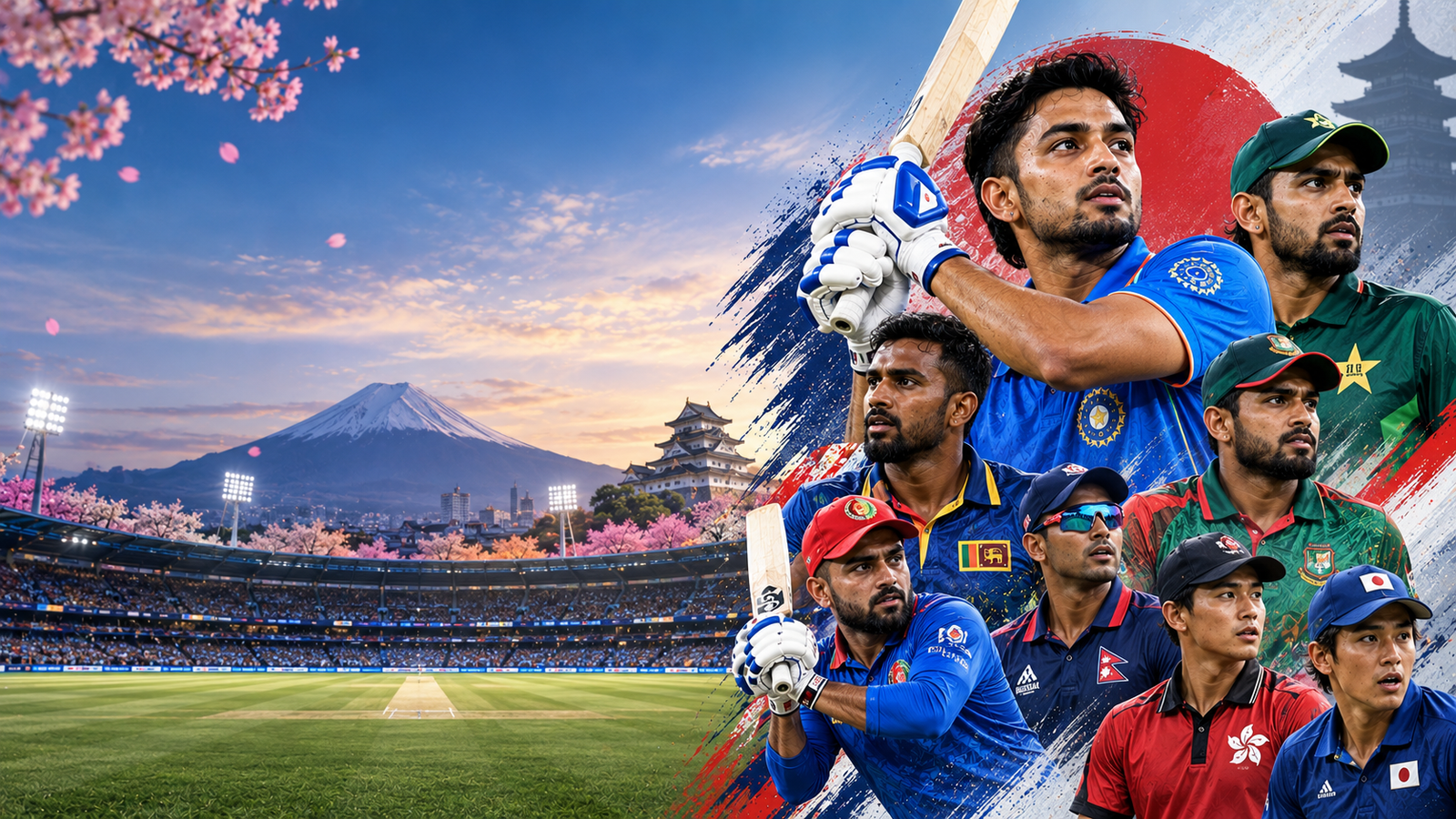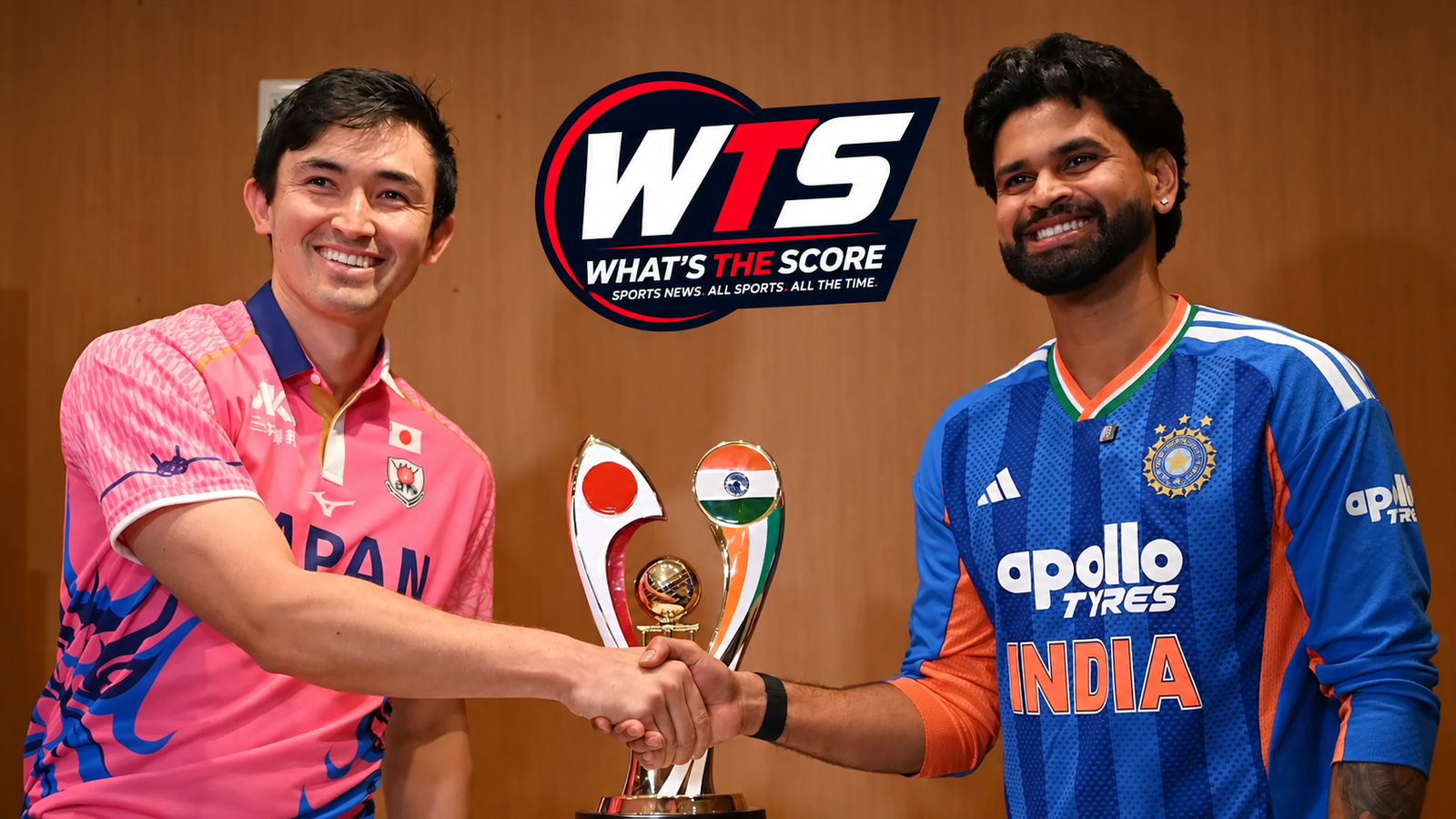
India survived a stunning challenge from Japan to win their historic one-off T20I by just two runs at the Sano International Cricket Ground on September 22, 2026.
The first-ever men's international cricket meeting between India and Japan turned into an extraordinary five-over thriller after a wet outfield delayed the start and forced the match to be reduced from 20 overs to five overs per side.
India struggled badly against Japan's spin attack and could manage only 32/4 from five overs. Japan then came remarkably close to pulling off a famous upset, finishing on 30/3 as Axar Patel held his nerve in the final over.
India vs Japan T20I 2026: Match Summary
| Match Detail | Information |
|---|---|
| Match | Japan vs India, One-Off T20I |
| Date | September 22, 2026 |
| Venue | Sano International Cricket Ground, Sano, Japan |
| Series | India Tour of Japan 2026 |
| Match | Suzuki Cup |
| Overs | 5 overs per side |
| India | 32/4 (5 overs) |
| Japan | 30/3 (5 overs) |
| Result | India won by 2 runs |
Wet Outfield Turns Historic T20I Into Five-Over Shootout
The match was originally scheduled as a conventional T20 international, but a wet outfield in Sano delayed the toss and start of play.
Following inspections, officials eventually decided that conditions were suitable for a heavily shortened contest, with each team receiving only five overs.
India captain Shreyas Iyer won the toss and elected to bat, giving his powerful batting line-up the opportunity to set the target.
What followed was completely unexpected.
Japan's Spinners Stun India's Batting Line-Up
Japan immediately demonstrated that the historic match would be far more competitive than expected.
Their spinners denied India's aggressive batters the freedom to score quickly and picked up wickets throughout the five-over innings.
India eventually stumbled to only 32/4, leaving Japan with a target of 33 runs for what would have been one of the most remarkable results in their cricket history.
Abhishek Sharma Dismissed for Golden Duck
India suffered a major setback when explosive opener Abhishek Sharma was dismissed for a golden duck.
Abhishek entered the match in sensational form after recently smashing a 30-ball T20I century against Afghanistan.
Japan's teenage spinner Charlie Hara-Hinze, however, removed him immediately and gave the hosts the perfect start.
The wicket was particularly significant considering Abhishek's reputation for dominating bowlers during the opening overs.
Sanju Samson and Ishan Kishan Also Struggle
India's problems continued as their top order failed to establish momentum.
Sanju Samson scored nine runs, while Ishan Kishan made three.
With only five overs available, every dot ball and wicket significantly increased the pressure on India's middle order.
Shreyas Iyer Top-Scores With 16
Captain Shreyas Iyer provided India's most important batting contribution.
Iyer scored 16 from 12 deliveries and finished as India's leading run-scorer.
Although the innings was modest by normal T20 standards, his 16 runs proved extremely valuable in a match ultimately decided by only two runs.
Charlie Hara-Hinze Leads Japan's Impressive Bowling Display
Teenage spinner Charlie Hara-Hinze was one of Japan's standout performers.
He finished with two wickets, including the crucial dismissal of Abhishek Sharma, as Japan restricted one of international cricket's most powerful batting line-ups.
Japan's spin-heavy strategy worked exceptionally well on a surface where India's batters struggled to generate consistent boundaries.
Japan Need Just 33 Runs to Create History
India's 32/4 left Japan needing only 33 runs from 30 deliveries.
Although India's international experience and bowling depth still made the visitors dangerous, the modest target suddenly gave Japan a realistic opportunity to defeat the reigning T20 world champions.
Japan Lose Early Wicket in Chase
India immediately applied pressure with spin.
Japan lost Lachlan Yamamoto-Lake to a run-out in the opening over and finished the first over at 2/1.
The hosts therefore needed to rebuild quickly with only four overs remaining.
Washington Sundar Strikes Twice
Washington Sundar produced India's most important bowling spell.
He first dismissed Ibrahim Takahashi before later removing Japan captain Kendel Kadowaki-Fleming.
Sundar finished with 2/13 from his two overs.
Those wickets proved decisive in preventing Japan from taking complete control of the chase.
Kendel Kadowaki-Fleming Keeps Japan Alive
Japan captain Kendel Kadowaki-Fleming kept the hosts in the contest with 12 runs from 12 balls.
His innings helped Japan recover from their early wickets and brought the required equation within reach heading into the closing overs.
Benjamin Ito-Davis also contributed an important unbeaten nine runs from eight balls.
Japan Need Eight From the Final Over
Japan entered the final over at 25/3, needing eight more runs to reach India's total.
The responsibility of defending India's tiny total fell to Axar Patel.
With almost no margin for error, Axar prevented Japan from finding the boundary they desperately needed.
Axar Patel Holds His Nerve in Dramatic Final Over
Axar conceded only five runs in the final over.
Japan managed singles and additional runs but were unable to produce the decisive boundary.
With the final delivery yielding only a single, Japan finished on 30/3.
India had survived by just two runs.
India vs Japan Final Scorecard
| Team | Score | Overs |
|---|---|---|
| India | 32/4 | 5 |
| Japan | 30/3 | 5 |
Result: India won by 2 runs.
Key Performers: India vs Japan
| Player | Team | Performance |
|---|---|---|
| Shreyas Iyer | India | 16 off 12 balls |
| Washington Sundar | India | 2/13 |
| Axar Patel | India | Defended 8 in final over |
| Charlie Hara-Hinze | Japan | 2 wickets |
| Kendel Kadowaki-Fleming | Japan | 12 off 12 balls |
| Benjamin Ito-Davis | Japan | 9 not out |
Historic First India vs Japan Men's International
The result was important, but the significance of the match extended well beyond the scoreboard.
This was the first men's international cricket match between India and Japan.
It was played as the Suzuki Cup and formed part of celebrations marking the 75th anniversary of diplomatic relations between India and Japan.
The match also represented Japan's first men's T20I against an ICC Full Member.
Japan Show Their Growing Cricket Potential
Japan may have lost the match, but their performance provided an important demonstration of the country's progress in international cricket.
Restricting India to 32/4 and taking the match to its final delivery against the reigning T20 world champions represented an impressive performance from the hosts.
The bowling of Charlie Hara-Hinze and the calm chase led by Kadowaki-Fleming and Ito-Davis ensured Japan remained within touching distance of a historic victory.
India Register Milestone T20I Victory
The narrow victory also produced a notable statistical milestone for India.
India became the first men's team to record 200 victories in T20 international cricket.
The landmark arrived in dramatically different circumstances from what many would have expected before the match, with Japan pushing India until the final ball.
India Turn Attention to Asian Games 2026
The Japan T20I served as India's final international preparation before the Asian Games 2026 men's cricket competition.
India have received direct entry into the knockout stage and are scheduled to begin their title defence with a quarter-final on September 28.
Japan, meanwhile, will begin their Asian Games campaign in the preliminary group stage.
For Shreyas Iyer's India, the narrow victory provides a timely reminder that short-format cricket can become unpredictable very quickly, particularly in reduced-over matches.
India vs Japan 2026: A Match Bigger Than the Result
India eventually walked away with the victory, but Japan's performance ensured the inaugural meeting between the two countries became a memorable contest.
A match that began as a celebration of sporting and diplomatic ties developed into a final-over thriller in which an emerging cricket nation came within two runs of defeating the reigning T20 world champions.
For cricket in Japan, the occasion provided international exposure and an opportunity to demonstrate the country's growing potential.
For India, the dramatic two-run victory completed their Japan visit before attention shifts fully towards defending their Asian Games gold medal.