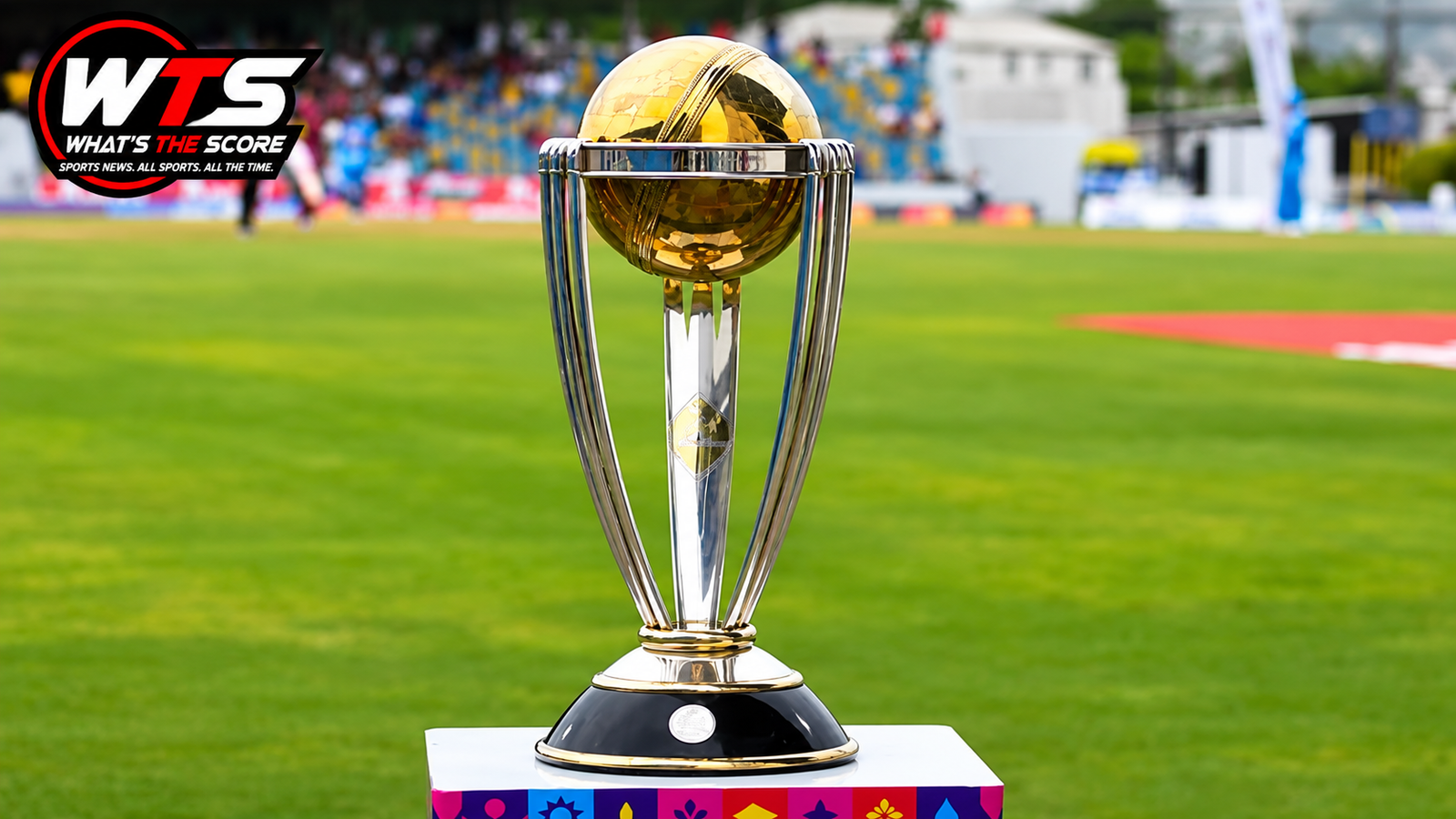
India's preparations for the ICC Men's ODI World Cup 2027 are entering a crucial phase. With the tournament heading to South Africa, Zimbabwe and Namibia, the challenge for Team India will be very different from playing ODI cricket on familiar subcontinental pitches.
India need more than a collection of star players. They need a combination capable of handling pace, bounce, seam movement and potentially challenging batting conditions in southern Africa.
That has placed India's batting order, pace-bowling depth, all-round options and overall team balance under increasing scrutiny.
Head coach Gautam Gambhir has acknowledged that conditions at the 2027 World Cup will be significantly different from those India frequently encounter at home. Meanwhile, bowling coach Morne Morkel, who has extensive experience of South African conditions, has emphasised the importance of developing multiple fast-bowling options ahead of the tournament.
The objective is clear: India cannot afford to arrive at the World Cup still searching for their best combination.
ICC ODI World Cup 2027: What India Need to Prepare For
The 2027 Men's Cricket World Cup will take international cricket's biggest ODI competition back to Africa.
South Africa, Zimbabwe and Namibia will co-host the tournament, with conditions across the region potentially placing greater emphasis on fast bowling than India typically experience at home.
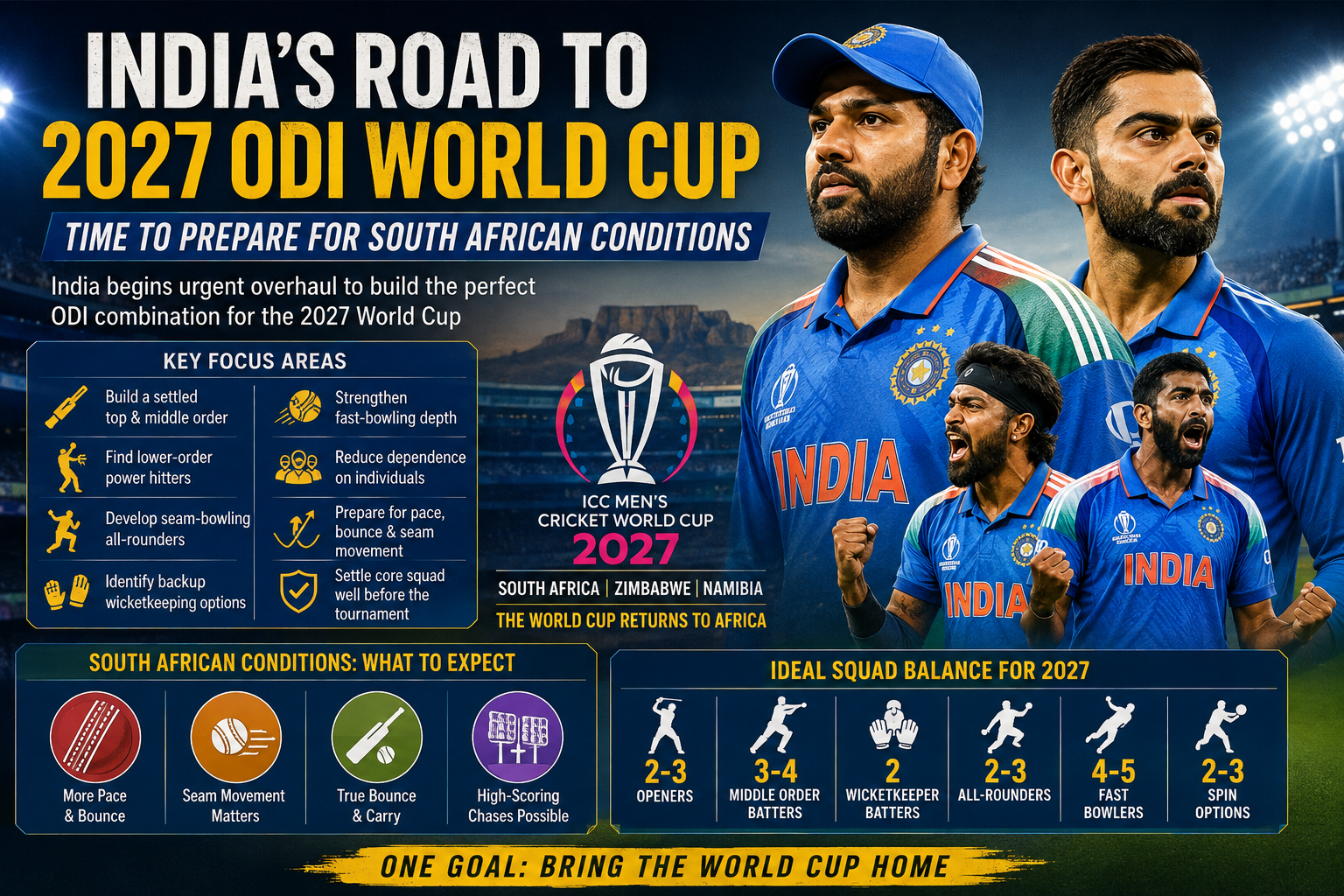
For India, preparation therefore needs to focus on several key areas:
- Building a settled top and middle order
- Developing batters capable of handling high-quality pace and bounce
- Finding reliable lower-order power hitters
- Creating greater fast-bowling depth
- Developing seam-bowling all-rounders
- Avoiding excessive dependence on individual players
- Identifying backup wicketkeeping options
- Settling on a core squad well before the tournament
The process has already started.
South African Conditions Could Change India's ODI Combination
India have traditionally been able to field multiple spinners in home conditions.
South Africa presents a different challenge.
Fast bowlers capable of extracting bounce and hitting the pitch hard could become particularly valuable, while India's batters will need to adjust against seam movement and steeper bounce.
Morne Morkel has specifically highlighted his understanding of South African surfaces and indicated that he can provide local knowledge as India's World Cup planning develops.
That could force India to rethink the balance they use in ODI cricket.
Instead of relying heavily on spin-bowling all-rounders, India may need combinations featuring three specialist seamers and potentially another pace-bowling option.
India's 2027 ODI World Cup Preparation: Key Areas
| Area | What India Need |
|---|---|
| Top Order | Stability and experience |
| Middle Order | Players comfortable against pace and bounce |
| Lower Middle Order | More finishing power |
| Wicketkeeper | Established starter plus experienced backup |
| All-rounders | Reliable batting plus genuine bowling options |
| Fast Bowling | At least 4–5 World Cup-ready options |
| Spin | Wicket-taking options for middle overs |
| Bench Strength | Experienced replacements |
| Conditions | More preparation for pace and bounce |
Rohit Sharma and Virat Kohli Remain Central to ODI Discussions
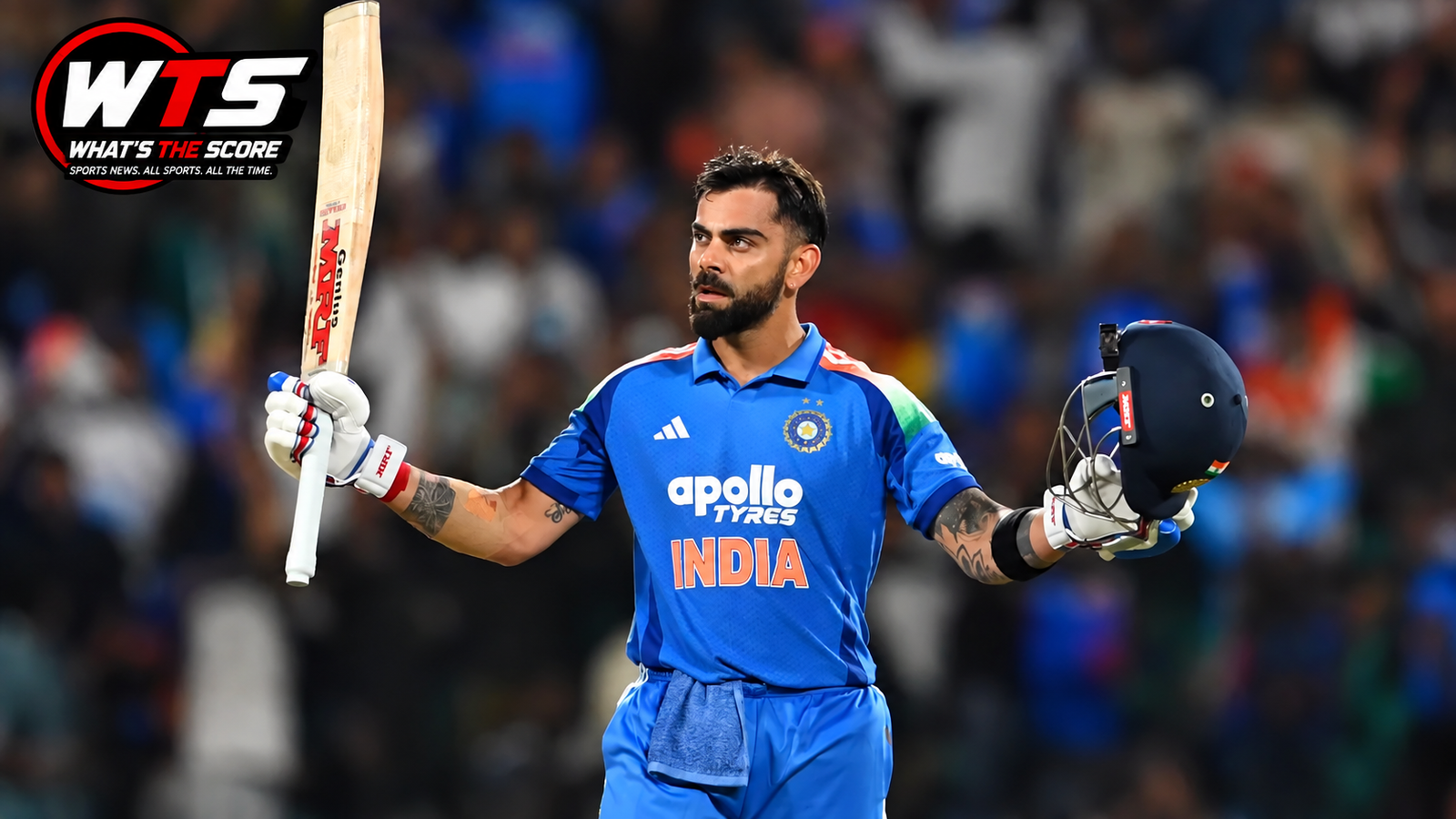
One of the biggest talking points around India's 2027 World Cup planning continues to be the future of Rohit Sharma and Virat Kohli.
The experienced duo remain major figures in India's ODI setup.
The original concerns about India's rebuilding process were complicated by their continued importance with the bat. Moving on too quickly would mean losing an enormous amount of ODI and World Cup experience.
Recent discussions within Indian cricket have continued to focus on their potential involvement in the 2027 World Cup, although the BCCI has avoided publicly committing to final selection decisions this far out from the tournament.
Rohit's experience has also received strong backing from Morne Morkel, who highlighted the calmness he brings to India's batting order during the 2026 ODI series in England.
India Cannot Repeat the No. 4 Problem of 2019
One of the lessons India should remember while preparing for 2027 comes from the 2019 ODI World Cup.
India entered that tournament without having completely settled their No. 4 position.
When the top order collapsed against New Zealand in the semifinal, India's middle order was unable to rescue the chase.
Former India selector Devang Gandhi argued that India should avoid repeating that mistake and establish a relatively small pool of players well before the 2027 tournament.
Constant experimentation can help discover talent, but at some point players also need clearly defined roles.
That will be particularly important for positions No. 4 through No. 7.
Shreyas Iyer and India's No. 4 Question
A fit and in-form Shreyas Iyer provides India with an established middle-order option.
But India also need a dependable backup.
Ruturaj Gaikwad has previously been experimented with in the position, while India's expanding pool of white-ball batters gives selectors several alternatives.
The key is not simply identifying another talented batter.
India need someone who understands the role and gets enough ODI experience in that position before the World Cup.
Changing the No. 4 batter every few series could recreate the uncertainty that hurt India before the 2019 tournament.
KL Rahul and the Wicketkeeping Question
Another important part of India's planning involves the wicketkeeper-batter position.
KL Rahul offers experience and flexibility, but India need adequate cover should their preferred wicketkeeper become unavailable during the World Cup.
That brings players such as Rishabh Pant and other wicketkeeping options into the discussion.
The backup cannot simply travel as insurance.
Whoever India identify as their second wicketkeeper should receive sufficient ODI match experience before the World Cup.
A major tournament is not the ideal place for an underprepared replacement to learn a new role.
India Need More Lower-Order Firepower
India's lower-middle-order balance is another area requiring attention.
In modern ODI cricket, teams increasingly need batting depth extending to No. 8.
India have several spin-bowling all-rounders, but South African conditions could make it difficult to select the same combination they might use on turning pitches at home.
That creates a valuable role for players who can provide both pace bowling and lower-order hitting.
India need a No. 7 or No. 8 capable of contributing meaningful runs without significantly weakening the bowling attack.
Hardik Pandya Remains Crucial — But India Need a Plan B
Few players solve India's team-balance problem as effectively as Hardik Pandya.
When fully fit, Hardik provides:
- Middle-order power
- Fast bowling
- Experience under pressure
- Flexibility in team selection
- An additional seam option
His presence allows India to strengthen either their batting or bowling without dramatically compromising the other department.
But depending entirely on Hardik would carry obvious risks.
The Times of India report highlighted former India wicketkeeper Deep Dasgupta's concern that India must prepare for the possibility that Hardik may not always be available.
Developing alternative seam-bowling all-rounders should therefore be one of India's biggest priorities before 2027.
Harshit Rana Could Become Important
One player who could fit India's South Africa plans is Harshit Rana.
Gambhir has previously highlighted the value of developing a player such as Harshit who can contribute with the bat at No. 8 while providing another pace-bowling option.
That combination could be extremely valuable in South Africa.
A bowling attack featuring genuine pace options without leaving the batting order excessively exposed would give India considerably greater tactical flexibility.
Jasprit Bumrah Will Lead the Pace Attack — But Depth Is Essential
If fit and available, Jasprit Bumrah is an obvious centrepiece of India's fast-bowling plans.
But winning a World Cup cannot depend on one bowler.
India need a group of pacers capable of succeeding if Bumrah is rested, injured or simply has an off day.
Morne Morkel has indicated that expanding India's pace reserves is part of the team's thinking ahead of the World Cup. Younger fast bowlers have consequently been given opportunities as India assess which options could eventually complement the established attack.
India should ideally arrive at the World Cup with four or five fast bowlers who already understand their ODI roles.
Should Mohammed Siraj Remain in India's World Cup Plans?
The omission of Mohammed Siraj from certain ODI combinations has generated discussion.
His experience and ability with the new ball could remain valuable, particularly in conditions where seam movement is available.
Rather than viewing World Cup selection as simply choosing three first-choice pacers, India need to think about building an entire fast-bowling unit.
Different South African venues can demand different approaches.
Having experienced alternatives available could become critical during a long tournament.
India's England ODIs Offered Valuable Lessons
India's 2026 ODI series in England offered useful preparation for the challenges they may encounter in South Africa.
Although England won the series 2-1, India experienced conditions where the new ball moved and batting required greater adjustment than on many subcontinental surfaces.
Morkel noted during the series that batters sometimes needed additional deliveries to adapt to the pace of the surface.
Those experiences could prove more valuable for World Cup preparation than simply dominating ODI series on familiar pitches.
India Need a Core Squad, Not Endless Experimentation
Experimentation is necessary during a rebuilding period.
But it cannot continue indefinitely.
India should gradually reduce their World Cup pool and identify approximately 18–20 serious candidates from whom the final squad will eventually be selected.
Each player should understand his expected role.
Instead of selecting players based purely on form immediately before the tournament, India's management needs clarity around:
Opening combinations → No. 3 → No. 4 → middle order → wicketkeeper → finishers → all-rounders → seam attack → spin options.
That continuity allows players to prepare specifically for situations they are likely to encounter during the World Cup.
India's Possible 2027 World Cup Blueprint
India's final squad is still far from settled, but the structure of an ideal squad is becoming easier to identify.
A balanced World Cup group could require:
- 2–3 opening batters
- 3–4 middle-order specialists
- 2 wicketkeeper-batters
- 2–3 all-rounders
- 4–5 fast bowlers
- 2–3 specialist spin options
The exact names will depend on form, fitness and performances over the next year.
The important issue is building sufficient experience within each role.
Why the 2027 World Cup Is Different From 2023
India entered the 2023 World Cup as hosts.
Conditions were familiar, travel was familiar and India's bowling attack was perfectly suited to home pitches.
The team dominated the tournament before losing to Australia in the final.
2027 presents almost the opposite challenge.
India will need to succeed away from home on surfaces that can reward pace and bounce.
That means simply recreating the 2023 formula is unlikely to be enough.
India need a squad designed specifically for Africa.
Gautam Gambhir's Biggest ODI Challenge
Gambhir's challenge isn't simply selecting India's 15 best players.
It is selecting the 15 players best suited to winning a World Cup in South Africa, Zimbabwe and Namibia.
That distinction matters.
India possess enough talent to field multiple competitive ODI teams.
But World Cups are often decided by role clarity, adaptability, fitness and squad balance rather than reputation alone.
Gambhir indicated earlier in 2026 that India's management intended to establish its World Cup blueprint as preparations intensified following the T20 World Cup.
The remaining ODI assignments will show how that blueprint evolves.