Devdutt Padikkal Makes It Two in Two as India’s New No. 3 Shines Against Sri Lanka
AGArpan Ghosh
· 4 min read
· 131 views
Updated
Share
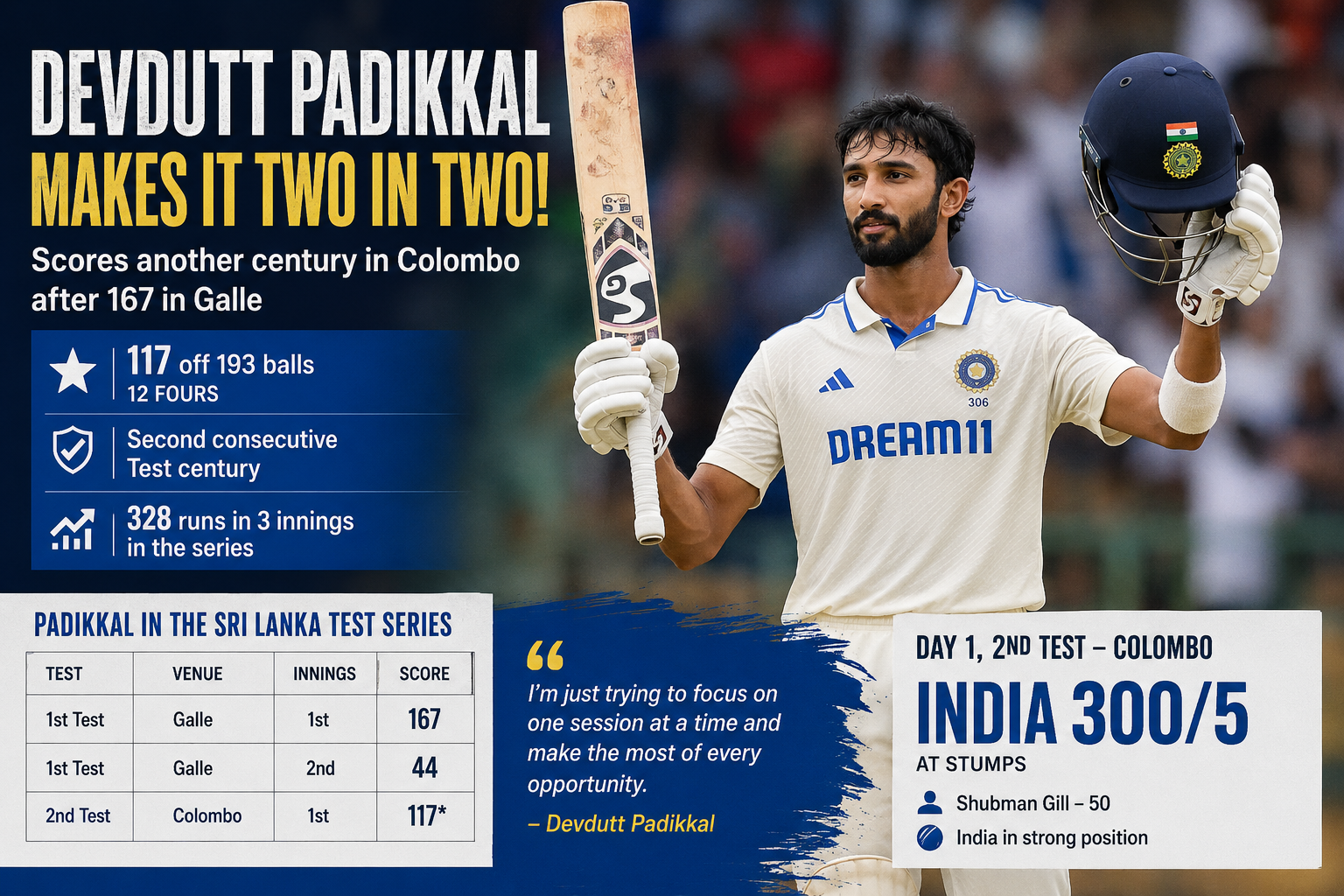
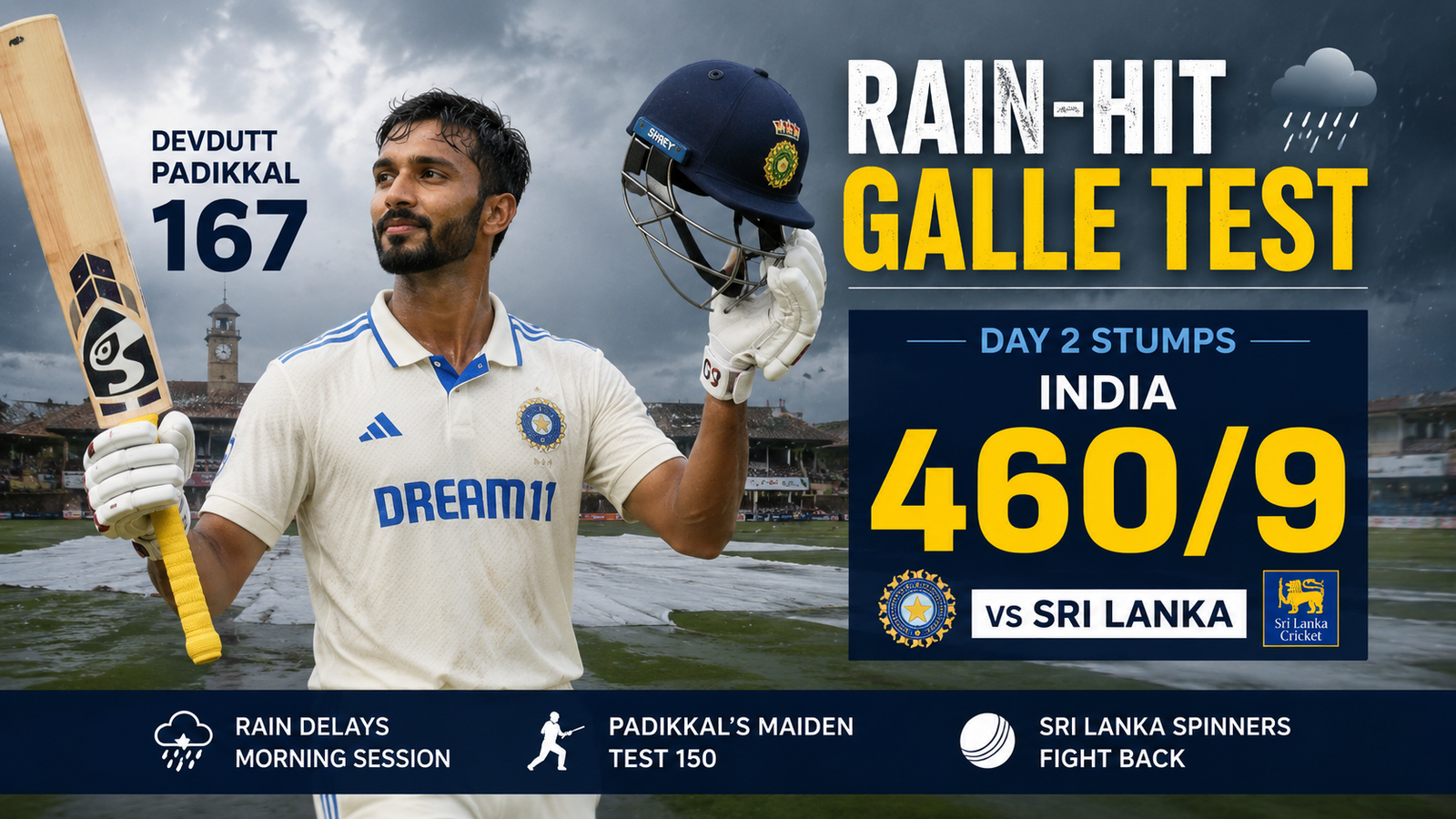
Devdutt Padikkal’s remarkable return to India’s Test setup continues to gather momentum. The elegant left-hander struck another superb century against Sri Lanka, scoring 117 in the second Test in Colombo after making 167 in the opening Test at Galle.
Two Tests, two centuries — and suddenly India may have found a compelling answer to one of the biggest questions surrounding their batting order: who should own the No. 3 position in Test cricket?
Padikkal Continues Stunning Form in Colombo
Padikkal walked out to bat with India needing stability on the opening day of the second Test in Colombo.
His innings did not begin perfectly. Sri Lanka had opportunities to dismiss him very early, with chances going down when he was on 0 and 1. The hosts would soon regret those misses.
Once settled, Padikkal grew increasingly assured against both pace and spin. He brought up his century from 168 deliveries before eventually being dismissed for 117 off 193 balls, an innings containing 12 fours.
His contribution helped India finish Day 1 at 300/5, putting the visitors in a strong position despite Sri Lanka creating opportunities during the day.
From 167 in Galle to 117 in Colombo
What makes Padikkal's performance particularly significant is that his Colombo hundred wasn't an isolated success.
In the first Test at Galle, Padikkal produced a brilliant 167 in India's first innings, his maiden Test century. He followed it with 44 in the second innings as India secured victory.
The performance earned him the Player of the Match award.
Now, with another hundred in Colombo, Padikkal has demonstrated something even more important than talent — consistency.
That gives Padikkal 328 runs from his first three innings of the series, including two centuries.
Making the No. 3 Position His Own
India's No. 3 position has been an important talking point since the end of Cheteshwar Pujara's long tenure in the role.
Several players have been considered for the position, but Padikkal's performances in Sri Lanka have strengthened his claim considerably.
His game appears particularly suited to the role. The left-hander has shown the ability to absorb pressure, rotate strike, attack spin and convert starts into substantial scores.
Perhaps most importantly, he has taken advantage of his opportunity.
Padikkal came into the Sri Lanka series after Sai Sudharsan was unavailable through injury. What initially appeared to be another opportunity to prove himself could now become a major turning point in Padikkal's Test career.
A Century After Surviving Early Chances
Sri Lanka will feel they allowed Padikkal back into the contest.
The Indian batter was given two very early reprieves, but Test cricket frequently punishes teams for missed opportunities.
Padikkal did exactly that.
Rather than allowing the early uncertainty to affect his innings, he became increasingly composed as his stay at the crease progressed. His ability to recover from the nervous beginning made the hundred even more valuable.
Important Partnership With Shubman Gill
Padikkal also received valuable support from Indian captain Shubman Gill, who scored a composed half-century.
The partnership helped India recover after losing early wickets and provided the foundation for their first-innings total.
Gill eventually departed for 50, but Padikkal continued to occupy the crease and ensure India maintained control of the day's proceedings.
Sri Lankan pacer Asitha Fernando was among the bowlers who kept India under pressure, but Padikkal's patience prevented the hosts from turning promising moments into a major collapse.
Why Padikkal's Success Matters for India
India are moving through a period of transition in Test cricket, making the emergence of reliable top-order batters particularly valuable.
Padikkal offers several qualities India will appreciate:
A technically sound left-handed option in the top order
Strong ability against spin
Experience across Indian domestic cricket
The temperament to bat for long periods
The ability to convert starts into hundreds
Flexibility to bat in different top-order positions
Two consecutive centuries do not guarantee a permanent position, but they make Padikkal increasingly difficult to leave out.Devdutt Padikkal’s remarkable return to India’s Test setup continues to gather momentum. The elegant left-hander struck another superb century against Sri Lanka, scoring 117 in the second Test in Colombo after making 167 in the opening Test at Galle.
Two Tests, two centuries — and suddenly India may have found a compelling answer to one of the biggest questions surrounding their batting order: who should own the No. 3 position in Test cricket?
Was this article helpful?
Your answer helps the desk improve future coverage.
What could be better? Optional
0 / 1000
Sources
Sportstar — original article supplied for this story
ESPNcricinfo — India vs Sri Lanka second Test match report
The Indian Express — Padikkal's second century and series performance
The New Indian Express — Day 1 report from the Colombo Test
Reuters — background on Padikkal's performance in the first Test
Frequently asked questions
How many runs did Devdutt Padikkal score in the second Test against Sri Lanka?
Devdutt Padikkal scored 117 runs off 193 deliveries in India's first innings of the second Test in Colombo.
How many centuries has Padikkal scored in the 2026 Sri Lanka Test series?
Padikkal has scored two centuries, making 167 in Galle and 117 in Colombo.
What did Devdutt Padikkal score in the first Test?
He scored 167 in the first innings and followed it with 44 in the second innings at Galle.
Is Devdutt Padikkal batting at No. 3 for India?
Padikkal has been used at No. 3 during the Sri Lanka series, and his back-to-back centuries have significantly strengthened his case for the position.
What was India's score at stumps on Day 1 of the second Test?
India finished the opening day of the Colombo Test at 300/5.
Arpan GhoshSenior Cricket Analyst, Historian & Former Cricketer
A cricket enthusiast with 12+ years of experience covering Test cricket, domestic cricket, IPL at home and abroad. Previously played cricket and covered with a strong focus on selection decisions, team strategy, player development, and the stories behind the scorecard.
Covers Test cricket, IPL, Domestic Cricket, Indian National Team, ISL, FIFA, ICC